
Explore Arnold
Knights Ferry covered bridge
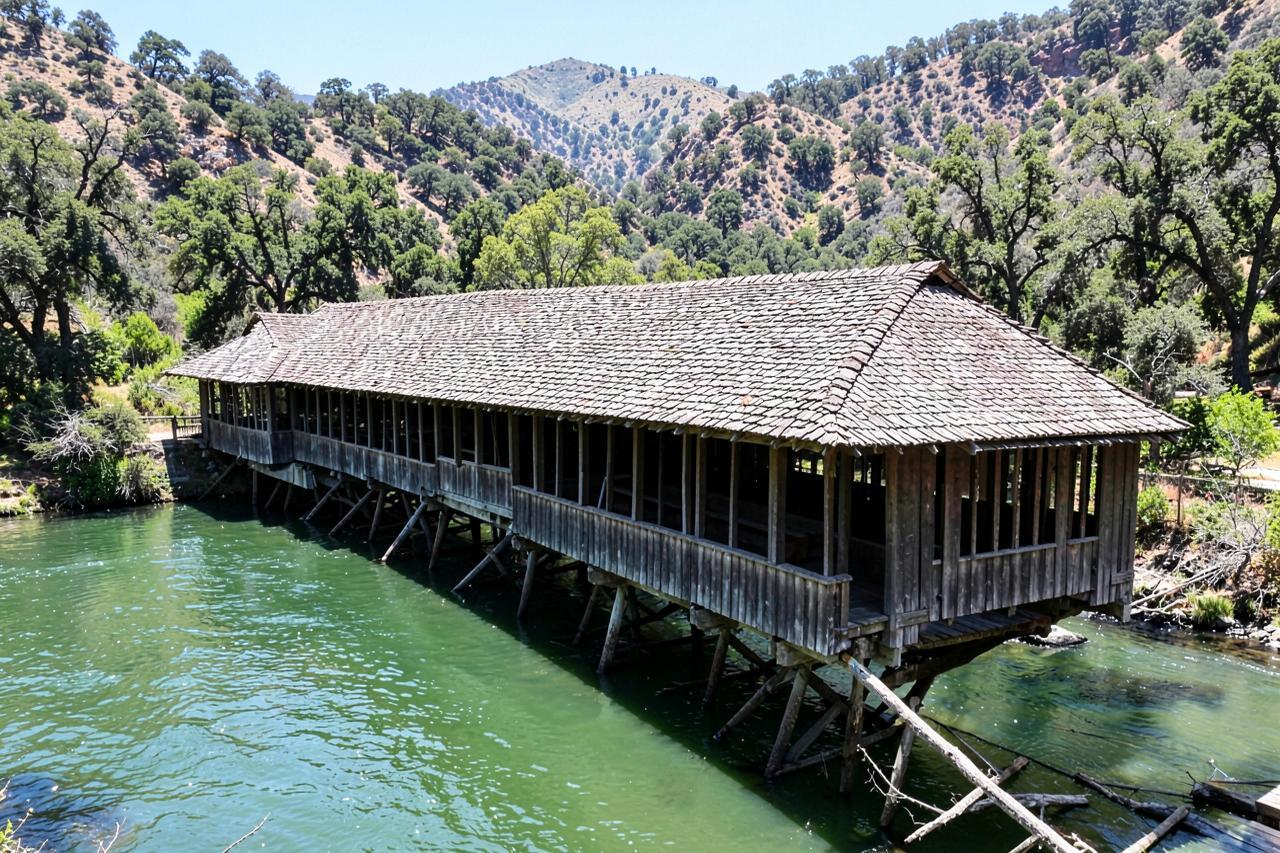
An 1863 covered bridge over the Stanislaus, mill ruins on the bank and a shaded picnic ground — the best free hour in the valley below Arnold.
First things first
First things first
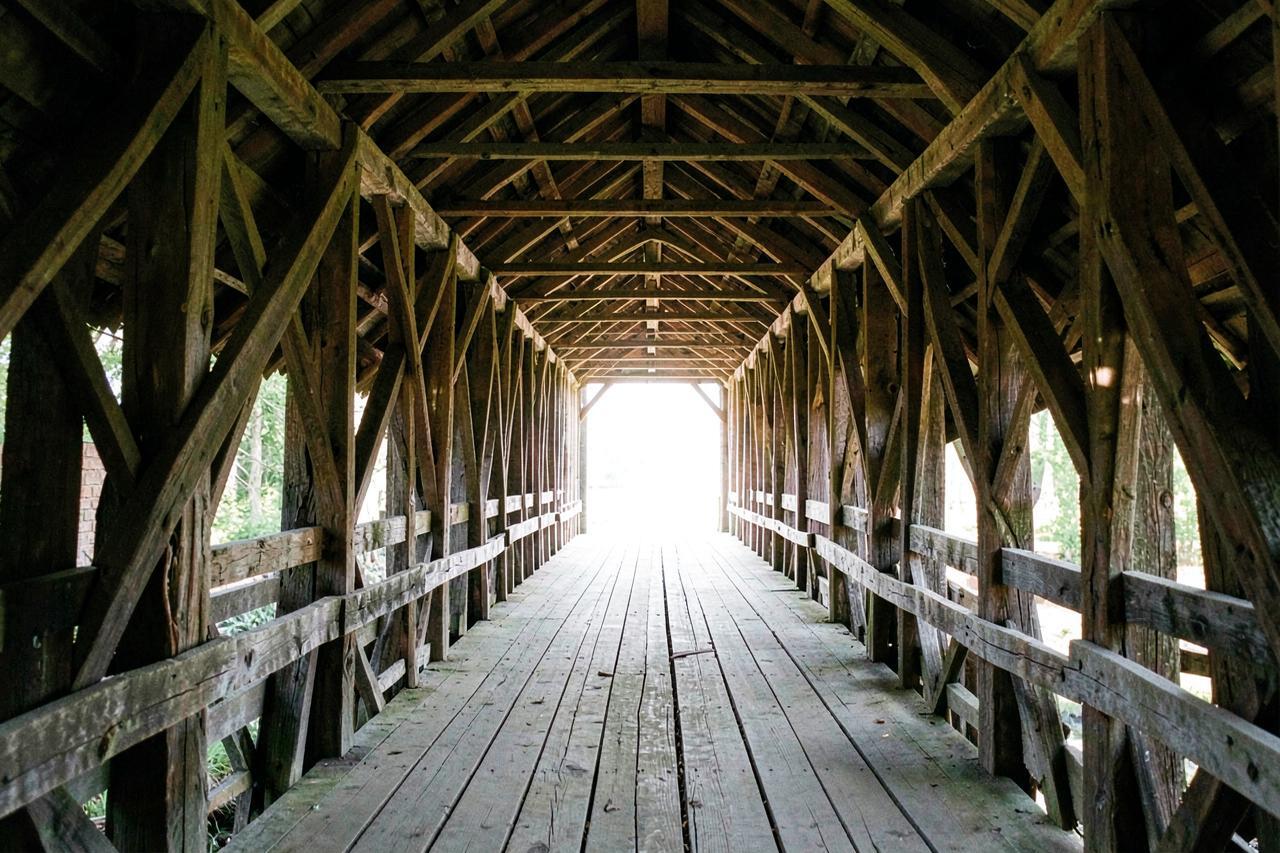
The covered bridge at Knights Ferry is the longest of its kind west of the Mississippi, built in 1863 after a flood took out the crossing that came before it. It is a walking bridge now, roofed in shingles and floored in planks, and standing inside it on a hot afternoon with the green river sliding underneath is genuinely worth the drive.
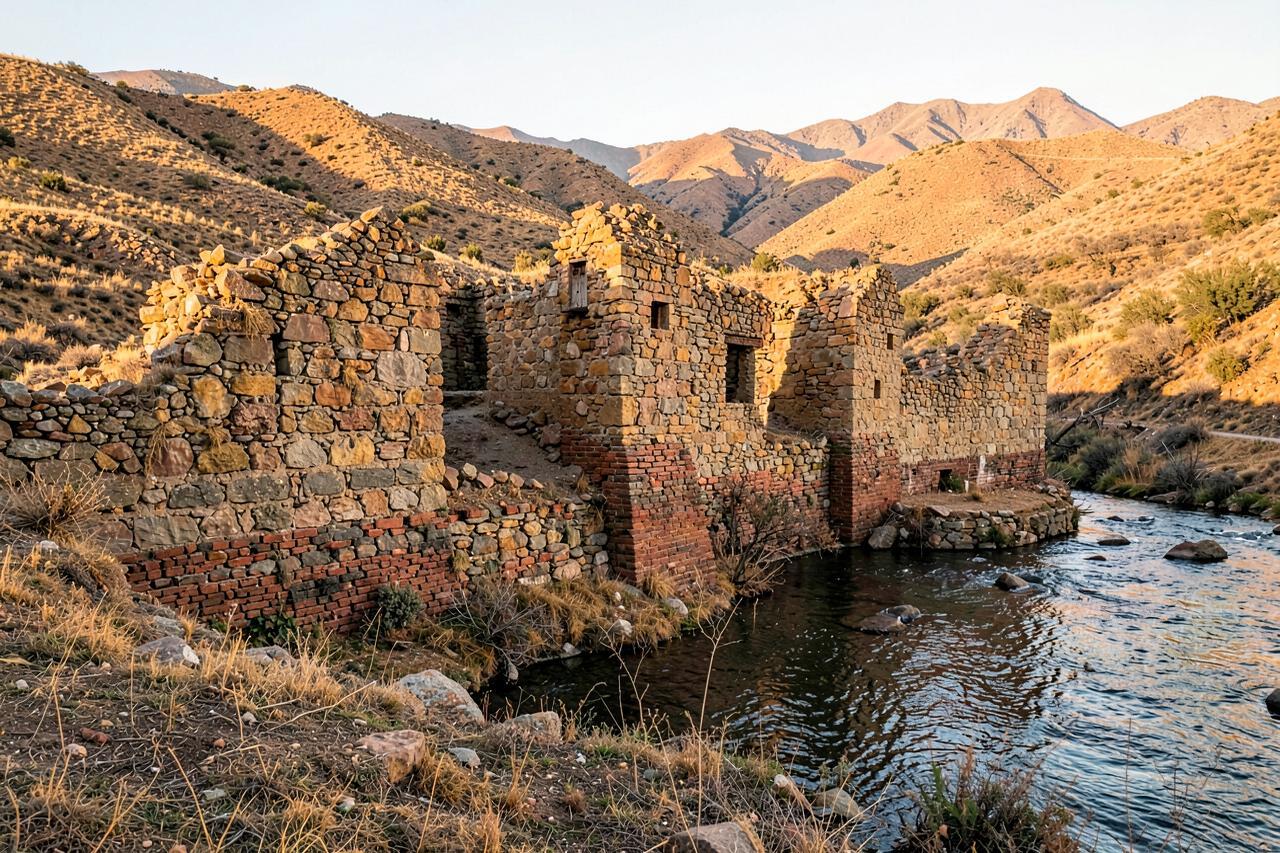
It sits in a river recreation area with picnic tables under big trees, the stone remains of the old mill on the bank, and paths along the water. There is no ticket booth and no fuss — you park, walk down and look at a piece of 1860s engineering that still smells of warm timber.
Geography
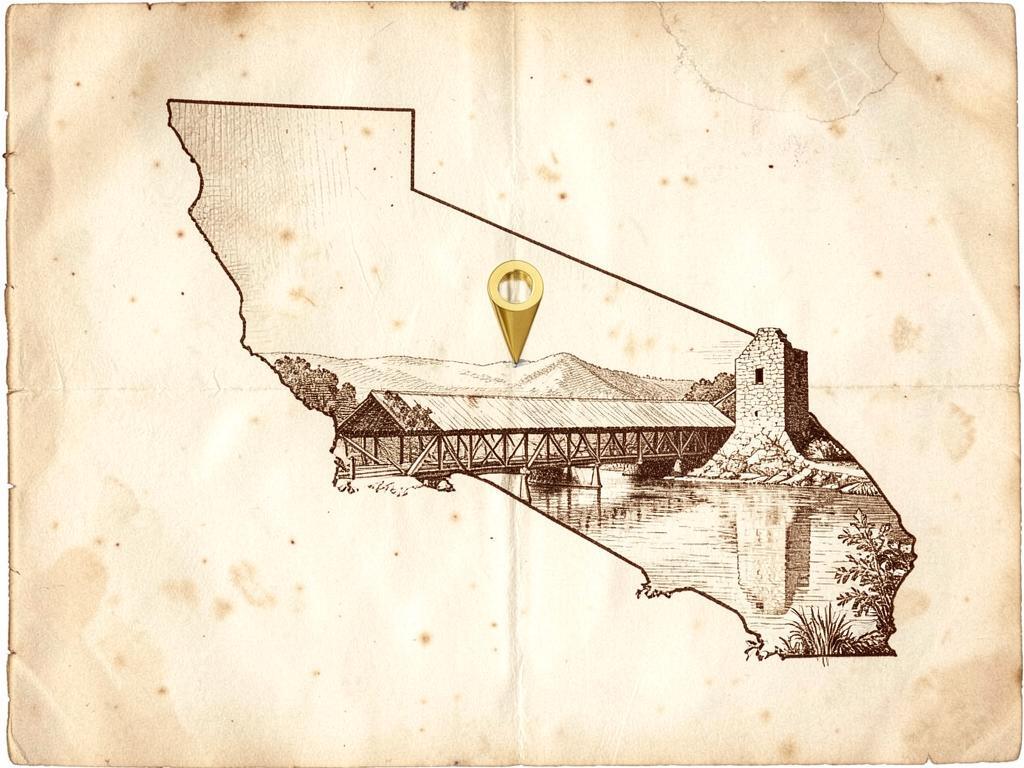
Where Knights Ferry covered bridge sits
Built in 1863 after a flood took the earlier crossing, it is the longest covered bridge west of the Mississippi and open to walkers only.
The mill ruins, interpretive panels and shaded picnic ground sit beside it in an Army Corps river recreation area.
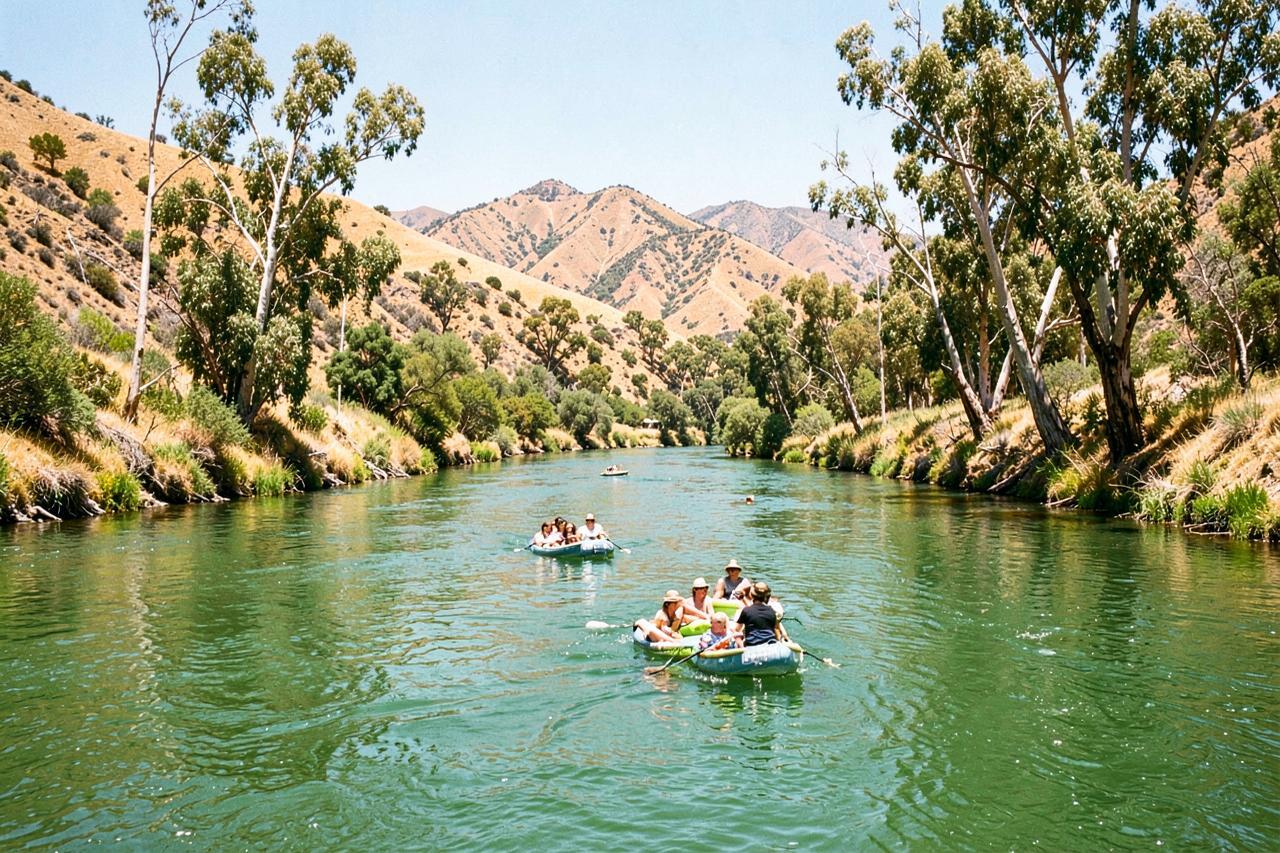
About an hour and a quarter from both cabins; easily paired with the river float that launches just below it.
- Region
- Central Valley edge, the lower Stanislaus River
- County
- Stanislaus County
- Elevation
- About 200 ft
- Nearest town
- Knights Ferry
- Getting there
- Highway 4 to Oakdale, then Sonora Road east; park in the river recreation area
The bridge and the mill
Walk the length of the bridge and back: the trusses overhead are the interesting part, and the openings frame the river in both directions. Below and beside it are the stone and brick walls of the flour and grist mill that made this a real town when the ferry here was the crossing on the road to the southern mines.
Interpretive panels tell the local version of the story — the ferry, the flood, the fire, the slow fade once the railroads and highways went elsewhere. It takes twenty minutes to read them all and they are better than most.
The picnic ground and the water
The recreation area beside the bridge, managed by the Army Corps of Engineers, has shaded tables, grass, toilets and river access. It is a good lunch stop before or after a float, and a pleasant destination on its own if you just want cold water and deep shade on a day when the valley is over a hundred degrees.
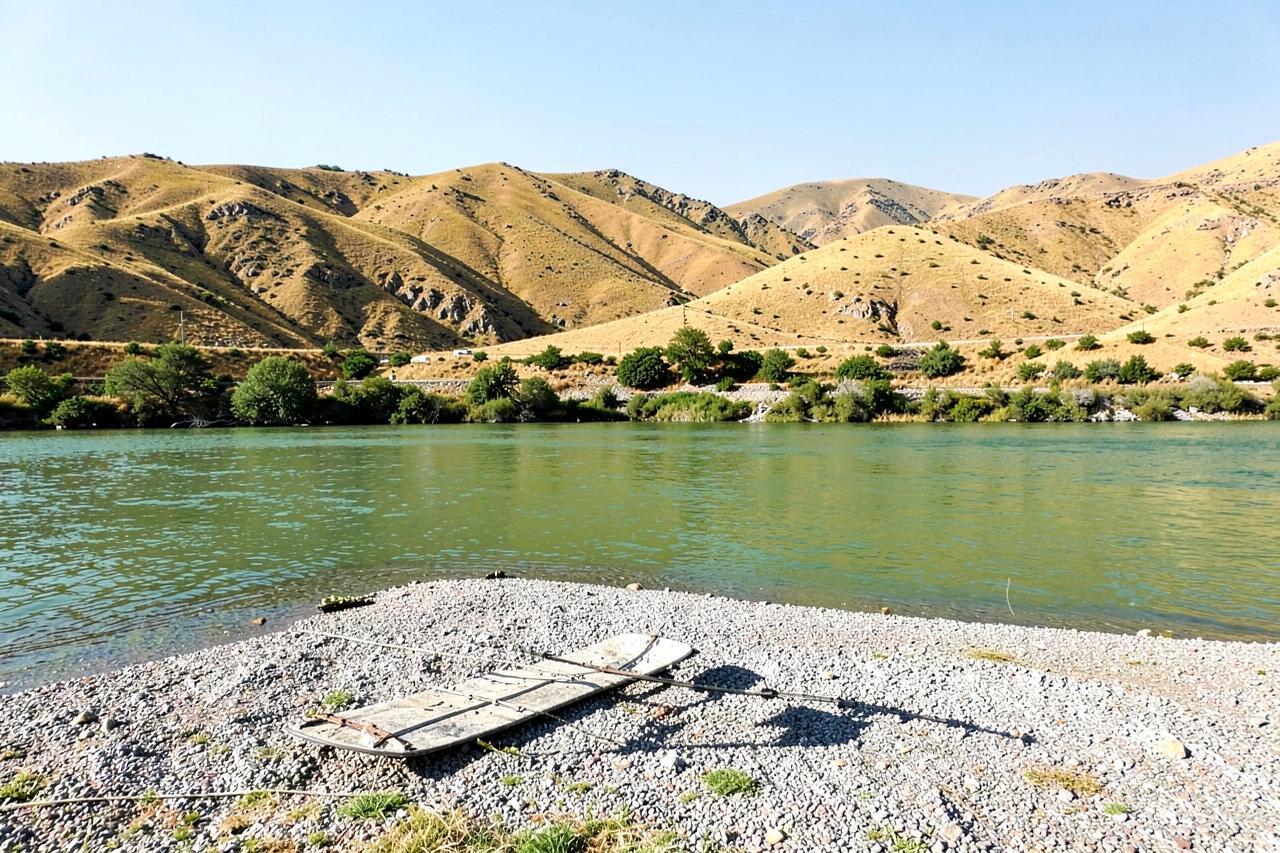
The river here is a dam-release river, which means cold water and changing flows. People swim, but do it near the banks, keep an eye on children, and remember that the current is stronger than the smooth surface suggests. Day-use hours and any closures are posted at the entrance.
How to fit it into a day
Most people from the cabins pair it with the float — bridge and picnic in the morning, river in the afternoon, or the reverse. If you are not rafting, tie it to Oakdale or to a Gold Country loop through Angels Camp on the way home.
It is a hot-valley destination, so go early or late in July and August. Spring, when the hills are green and the river is high, is the prettiest time to see it.
Where to stay near the covered bridge
Both cabins are about an hour and a quarter away in Arnold, up at 4,000 feet in the pines — which is where you want to be by evening after a day in the valley heat. Hot tub, full kitchen, and Calaveras Big Trees five minutes down the road for a cooler morning.
Good to know
Frequently asked questions
Can you drive across the Knights Ferry covered bridge?+
No — it is open to people on foot only. Park in the recreation area and walk down.
Is there a fee?+
The bridge and the surrounding river recreation area are generally free to visit for day use. Check posted hours and any seasonal closures at the entrance before you plan around it.
How old is the bridge?+
It dates from 1863, built after a flood destroyed the earlier crossing, and it is the longest covered bridge west of the Mississippi.
How far is it from Arnold?+
About an hour and a quarter from both cabins, down Highway 4 and out into the Stanislaus valley.