
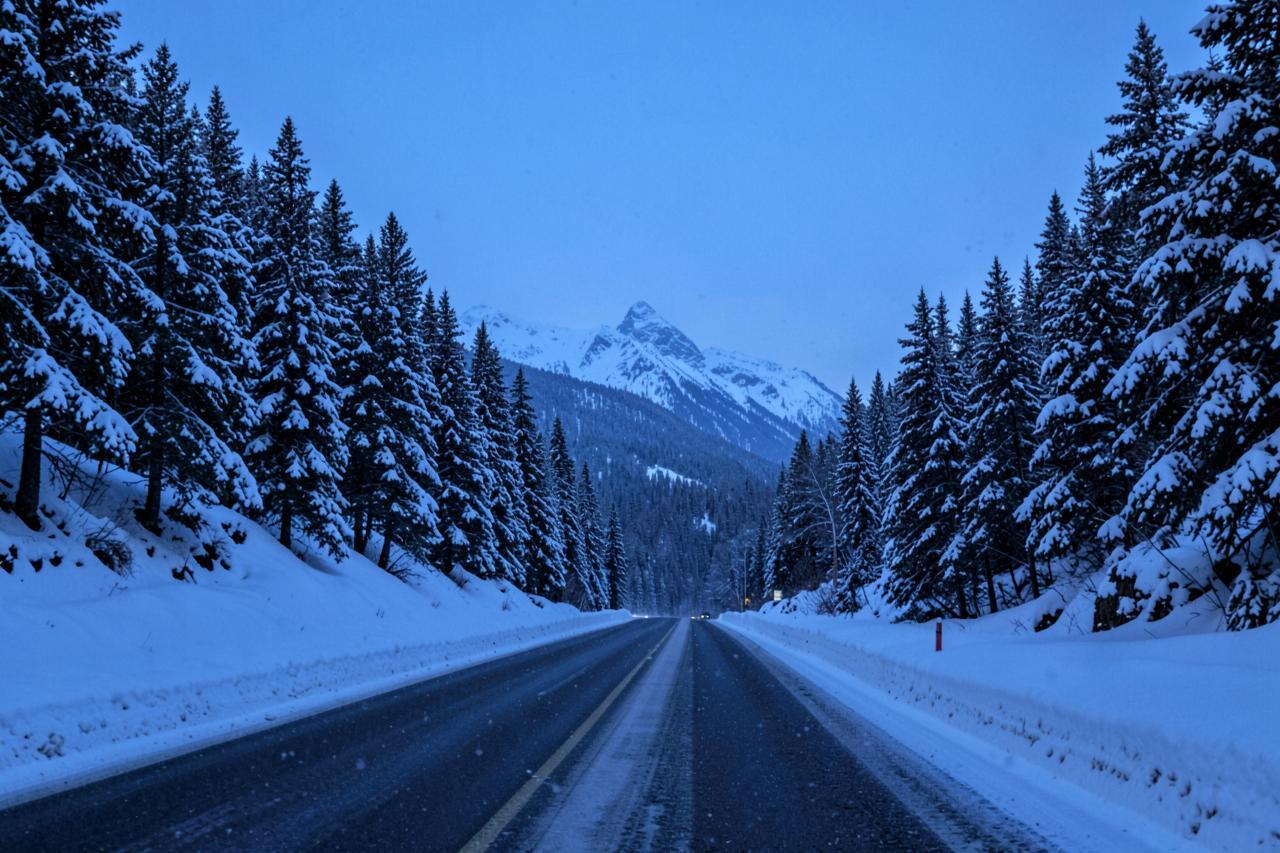
Snow
When It Snows in the Sierra, by Elevation
"When does it snow in California" has one honest answer: it depends entirely on how high you are standing. This page sets out when snow arrives, when it is reliable and when it melts for each elevation band on the Highway 4 and Highway 108 corridors, with the historical opening and closing dates for Bear Valley and Dodge Ridge — and, further down, the live snow depth at both mountains today.
Snow
First things first: California's snow season is a question about altitude
September 13, 2026
Almost all of California's snow falls in the Sierra Nevada between November and April, and how much of it you see depends on one number: your elevation. Two places forty minutes apart on the same road can have a two-inch dusting and a four-foot base on the same morning. That is not a quirk; it is the entire structure of a Sierra winter, and it is why a single answer to "when does it snow in California" is always wrong.
The mechanism is simple. Pacific storms arrive with a snow level — the altitude at which rain turns to snow — usually somewhere between 4,000 and 7,000 feet. A warm atmospheric river can push it to 8,000 and rain on the snowpack; a cold trough can drop it to 2,000 and put snow on the foothill towns for a day. Everything in the table above is the average of those events at each height.
For planning, the useful version is this: below 4,000 feet, treat snow as an occasional event. Between 4,000 and 6,000, expect winter to come and go. Above 6,000, expect continuous cover from December to April.
The data
Snow by elevation band, Highway 4 and Highway 108
Typical first and last snow, the weeks when cover is reliable, and average season snowfall for each band. Typical means the pattern across recent seasons, not a guarantee — the Sierra swings enormously from one winter to the next.
| 1,000–2,500 ft | Angels Camp, Sonora, Murphys, Columbia | Rare — once every few years | Never | Same day | 2 | Rain, not snow. Green in winter, brown in summer. |
| 2,500–4,000 ft | Twain Harte, Dorrington, lower Arnold | Late November | Mid-January to mid-February | Mid-March | 45 | Snow falls and often melts within the week. Roads ploughed bare. |
| 4,000–5,000 ft | Arnold, Big Trees North Grove, Cold Springs | Mid-November | January to early March | Early April | 90 | Where the cabins are. Snow in the garden, clear road to the door. |
| 5,000–6,000 ft | Pinecrest, Strawberry, Big Trees South Grove road | Early November | December to March | Late April | 150 | Sledging and snowshoeing without a lift ticket. Chains often required. |
| 6,000–7,000 ft | Dodge Ridge base, Leland snow play, Cottage Springs | Late October | Late November to early April | Mid-May | 250 | Ski-season base elevation. Chain control most storms. |
| 7,000–8,000 ft | Bear Valley village, Lake Alpine, Mount Reba base | Mid-October | Mid-November to late April | Early June | 350 | Deep, long winter. Side roads unploughed until late spring. |
| 8,000–9,000 ft | Bear Valley summit, Ebbetts Pass approach | Early October | November to May | Late June | 400 | Passes shut here. Skiing into May in a big year. |
| Above 9,000 ft | Sonora Pass, Tioga Pass, the crest | September | October to June | July, and some years not at all | 450 | Closed roads and cornices. Summer only. |
Click any column heading to sort. Free to reuse with attribution.
Average season snowfall by elevation band
Inches of snow in an average season. The curve is why 3,000 feet of elevation completely changes a winter trip.
-
Above 9,000 ft — the crest450″
-
8,000–9,000 ft — Ebbetts approach400″
-
7,000–8,000 ft — Bear Valley350″
-
6,000–7,000 ft — Dodge Ridge base250″
-
5,000–6,000 ft — Pinecrest150″
-
4,000–5,000 ft — Arnold90″
Where the cabins sit
-
2,500–4,000 ft — Twain Harte45″
-
1,000–2,500 ft — the foothills2″
Sources
- Snowfall averages and first/last snow: National Weather Service Sacramento climate records and California Department of Water Resources snow course and snow pillow data for the Stanislaus and Mokelumne basins.
- Melt-out dates: CDEC snow sensor records at Bear Valley, Blue Lakes and Gianelli Meadow.
- Pass closure dates: Caltrans District 10 mountain passes programme and National Park Service historical Tioga Road dates.
- Resort season dates: Bear Valley and Dodge Ridge published opening and closing dates, 2015 to 2026.
The 4,000-foot line, which is where the cabins sit
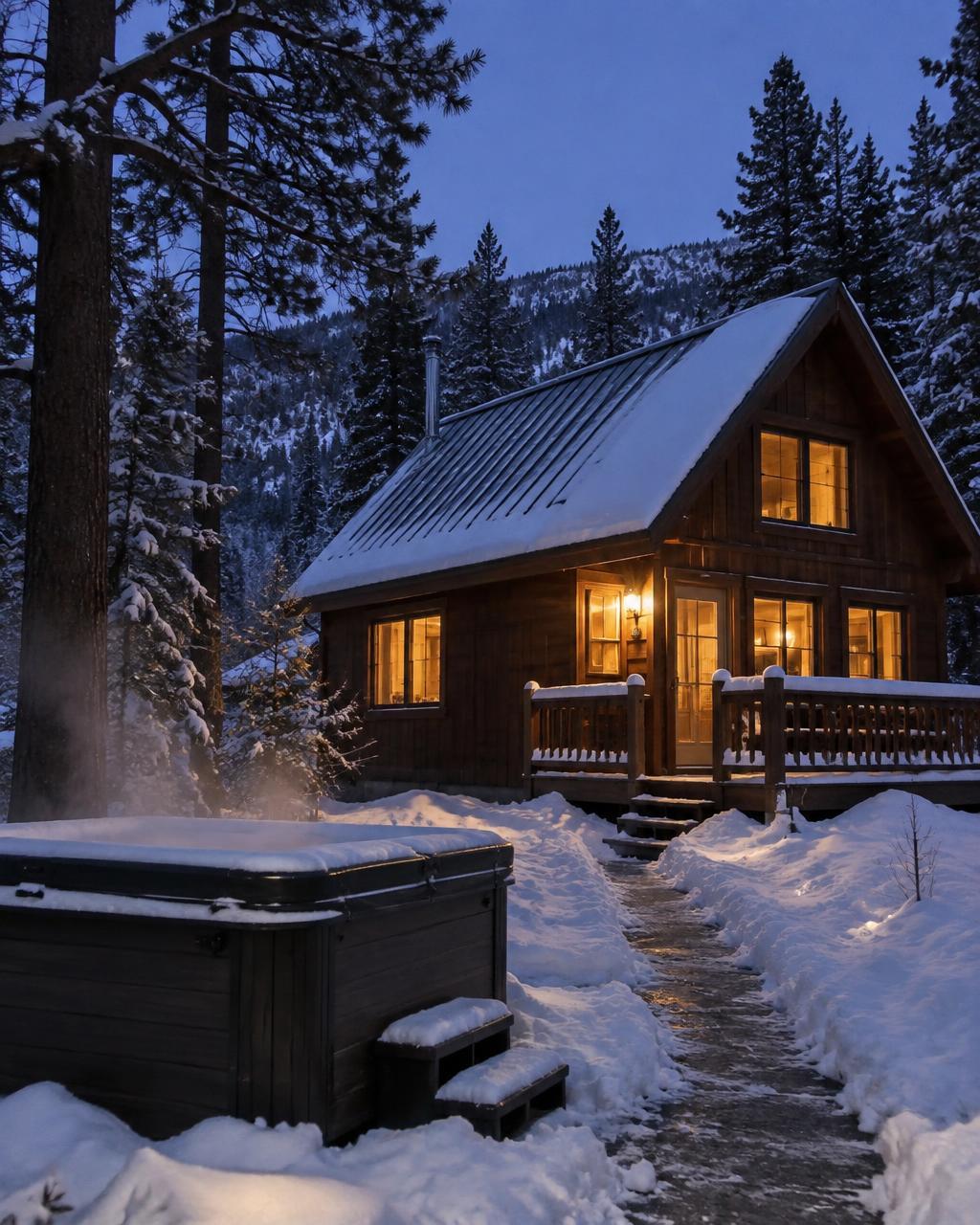
Arnold sits at almost exactly 4,000 feet, and that turns out to be the most useful altitude on the corridor. It gets about ninety inches of snow in an average season — enough that January mornings are white and the trees carry snow — while the highway to the door is ploughed and usually bare. Snow arrives around the middle of November, cover is reliable from January to early March, and it has generally gone by early April.
The practical value of that line is that you drive up to the snow rather than living in it. Bear Valley, at 7,100 feet with four times the snowfall, is forty minutes above; the sledging hills at Leland are half an hour. You get the winter without shovelling out a driveway every morning to reach it.
Ninety inches a season, a ploughed road to the door, and deep snow half an hour uphill.
Elevation: 4,000 ft · First snow: mid-November · Reliable: January to early March · Melts: early April
Snow report
Bear Valley conditions right now
Live mountain weather for Bear Valley, plus the resort's own mountain cameras so you can see the snow before you load the car in Arnold.
- Base
- 6,600 ft
- Summit
- 8,500 ft
Now
54°F
Sky
Sunny
Wind
14 mph
Snow next 24h
0"
Snow next 72h
0"
Snow past 24h
—
Snow level
9,800 ft
Snow is forecast to fall above about 9,800 ft. Arnold sits near 4,000 ft, so expect rain at the cabins and snow once you climb past Dorrington.
Today
59°
40° low
—
Mon
68°
43° low
—
Tue
64°
42° low
—
Wed
61°
42° low
—
Thu
62°
42° low
—
Mountain forecast for Bear Valley Mountain, California from the National Weather Service, as of Sep 13, 10:17 AM PT.
Bear Valley sits high enough to hold winter longer than almost anything else on Highway 4. The village sits near 7,100 feet, the lifts reach down to a 6,600-foot base, and the summit tops out around 8,500, which means storms that fall as rain down in Arnold usually stack up as dry snow on the pass. In a good season the mountain collects well over 300 inches, and it is not unusual for a single Pacific system to drop two or three feet in 48 hours.
The season typically runs from around mid-December through early April, with the deepest base in February and March and long, soft spring days after that. Because the resort is only about 30 miles up the highway from the cabins, it is easy to watch a storm land overnight, check the cams over coffee, and be on the hill before the groomers are tracked out.
The live camera is hosted by YouTube, which sets its own cookies.
Base Cam
Village base area, lifts and the day lodge.
The live camera is hosted by YouTube, which sets its own cookies.
Summit Cam
Looking out from the top of the mountain.
When the ski hills actually open and close
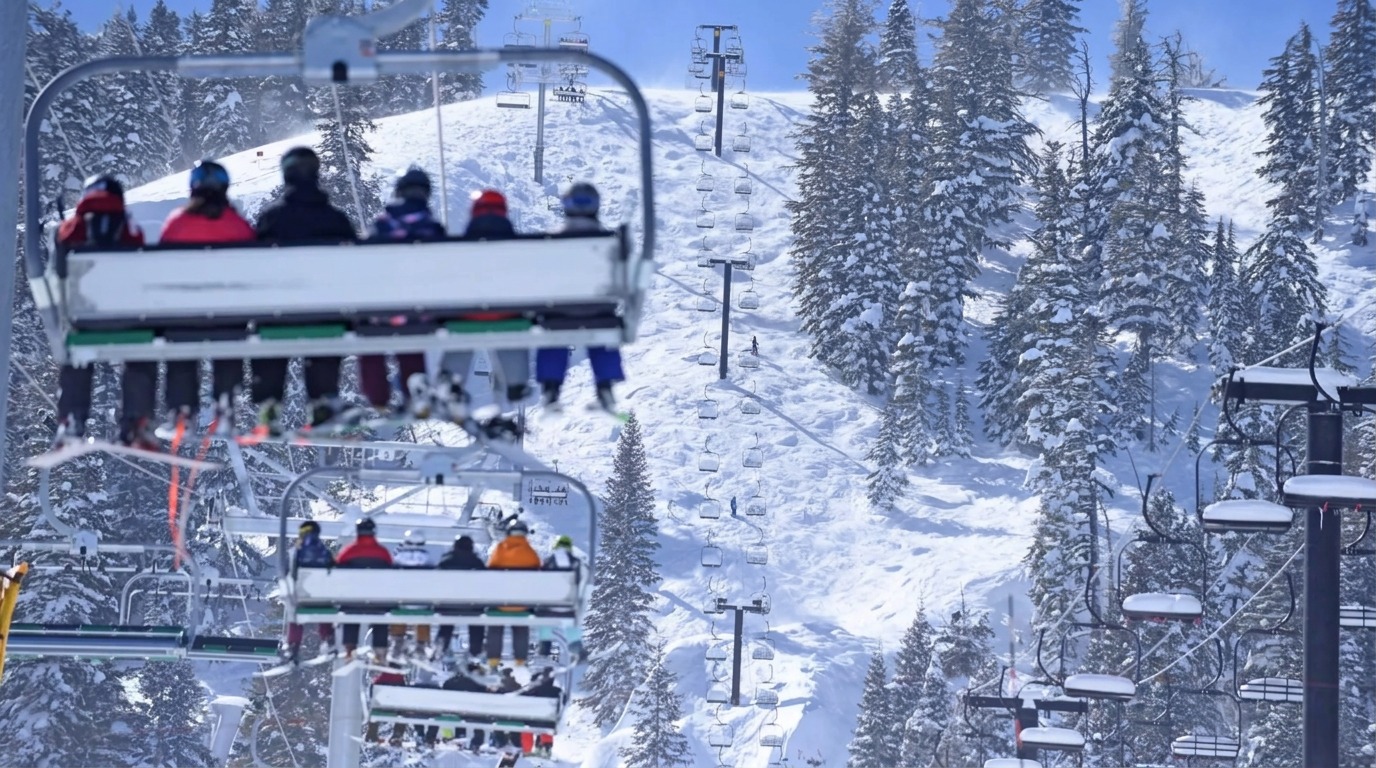
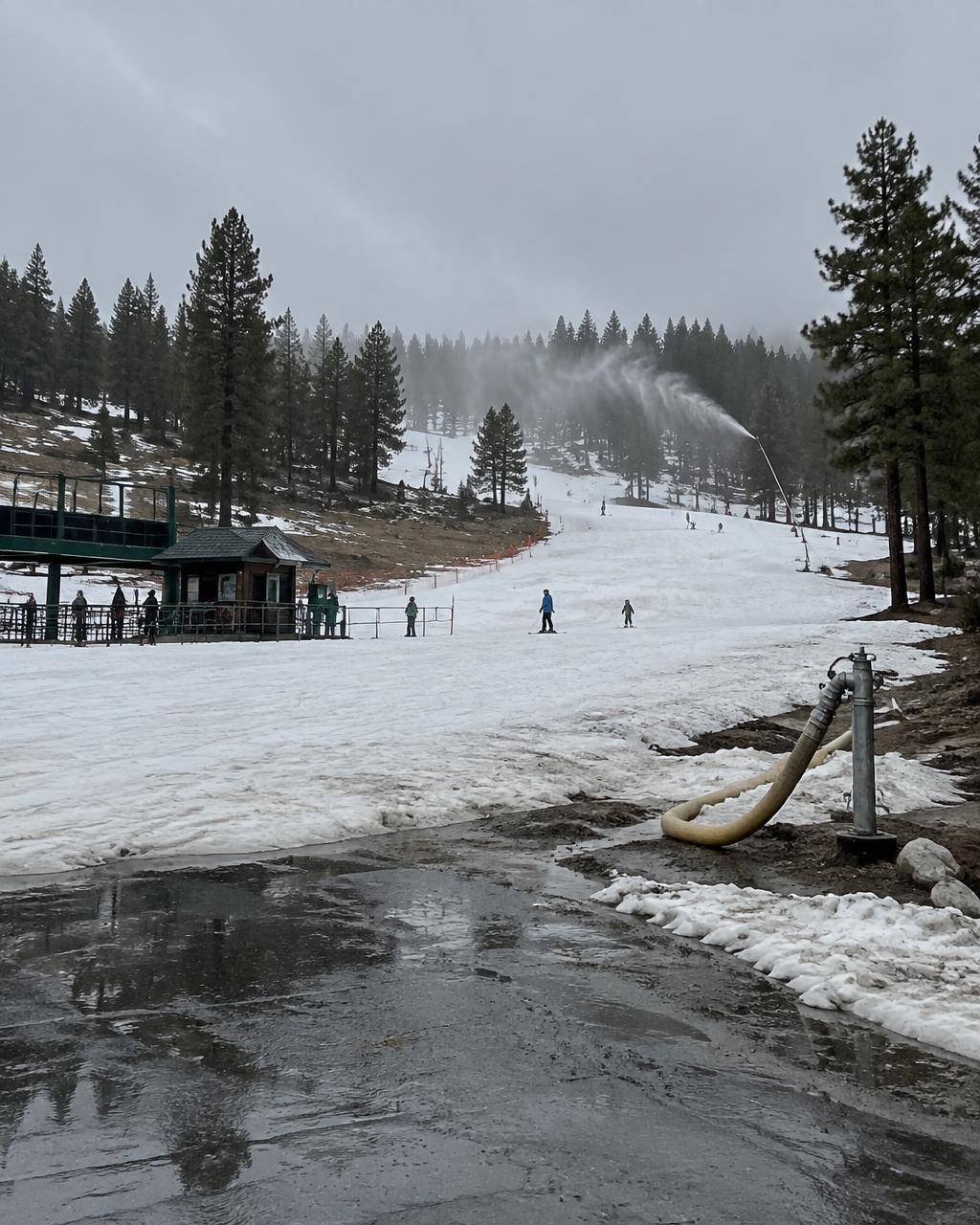
Across the last decade Bear Valley has usually opened in the second week of December and closed in the first half of April, with genuine outliers on both sides: a mid-November opening after an early storm cycle, and a season that ran into May after a record year. Dodge Ridge, a thousand feet lower at its base, tends to open a week or so later and close a week or so earlier for the same reason — 6,600 feet holds less than 7,100.
Neither commits to a date until the snow is on the ground, and both open on partial terrain first. The reliable window for a booked ski trip is the second week of January to the first week of March. Christmas is busy and, roughly one year in four, thin. Late March is the best value and the most variable.
Book January to early March if the skiing is the point. Book anything if the snow is a bonus.
Bear Valley: 7,100 ft base, opens mid-December, closes early to mid-April · Dodge Ridge: 6,600 ft base, opens mid- to late December, closes early April
What the passes tell you about the season
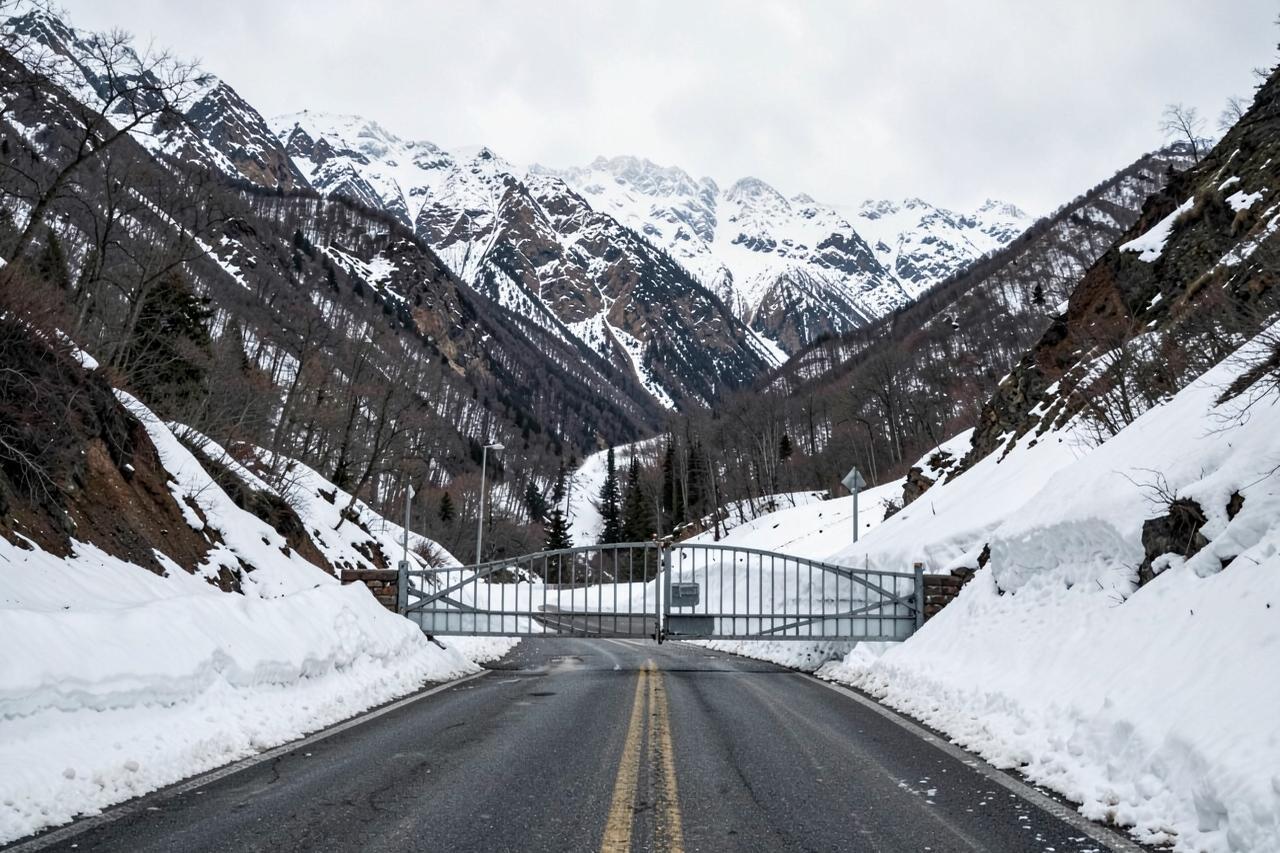
The seasonal closure of Ebbetts Pass on Highway 4 and Sonora Pass on Highway 108 is the clearest single signal of where a winter is going. Caltrans shuts both with the first sustained storm — usually the first half of November — and reopens them in late May in an average year, mid-May in a light one and as late as July after a big one. Tioga Road in Yosemite behaves the same way and the Park Service publishes every opening date back to 1933, which makes it the best long record of Sierra winters anyone has.
If the passes are still closed in June, the high country is not walkable yet and the lakes above 7,000 feet are still frozen at the edges. If they open in early May, expect a dry summer and low reservoirs.
Late opening means a deep year and a short summer. Early opening means fire season starts early too.
Ebbetts: 8,730 ft · Sonora: 9,624 ft · Tioga: 9,945 ft · Typical closure: early November to late May
Snow report
Dodge Ridge conditions right now
Live mountain weather for Dodge Ridge above Pinecrest, so you know what Highway 108 looks like before you commit to the drive from Arnold.
- Base
- 6,600 ft
- Summit
- 8,200 ft
Now
62°F
Sky
Sunny
Wind
12 mph
Snow next 24h
0"
Snow next 72h
0"
Snow past 24h
—
Snow level
9,900 ft
Snow is forecast to fall above about 9,900 ft. Arnold sits near 4,000 ft, so expect rain at the cabins and snow once you climb past Dorrington.
Today
66°
43° low
—
Mon
72°
44° low
—
Tue
71°
44° low
—
Wed
71°
45° low
—
Thu
73°
47° low
—
Mountain forecast for Dodge Ridge, Pinecrest, California from the National Weather Service, as of Sep 13, 10:17 AM PT.
Dodge Ridge sits at the end of Highway 108 above Pinecrest, with a base around 6,600 feet and a summit near 8,200. That is a little lower than Bear Valley, so early- and late-season storms can arrive wet at the bottom while still stacking up nicely on the upper mountain. In a strong winter the area still measures its snowfall in hundreds of inches, and there is light snowmaking at the base to hold the beginner terrain together.
The season usually runs from late November into mid-April, with the most reliable coverage from January through March. The drive from Arnold is the long part — down Highway 4 and back up 108 — so it pays to look at the live numbers below and the resort's own report before you leave, especially when chain controls are in place.
The live camera is hosted by the resort's camera provider, which sets its own cookies.
Summit Cam
Top of the mountain at 8,200 feet, looking out over the upper runs.
The live camera is hosted by the resort's camera provider, which sets its own cookies.
Mid-Mountain Cam
The 7,000-foot mid-mountain view, a good read on visibility and wind.
The live camera is hosted by the resort's camera provider, which sets its own cookies.
Base Area Cam
Base area at 6,600 feet — lifts, lodge and the parking lot snow line.
Snow without a lift ticket
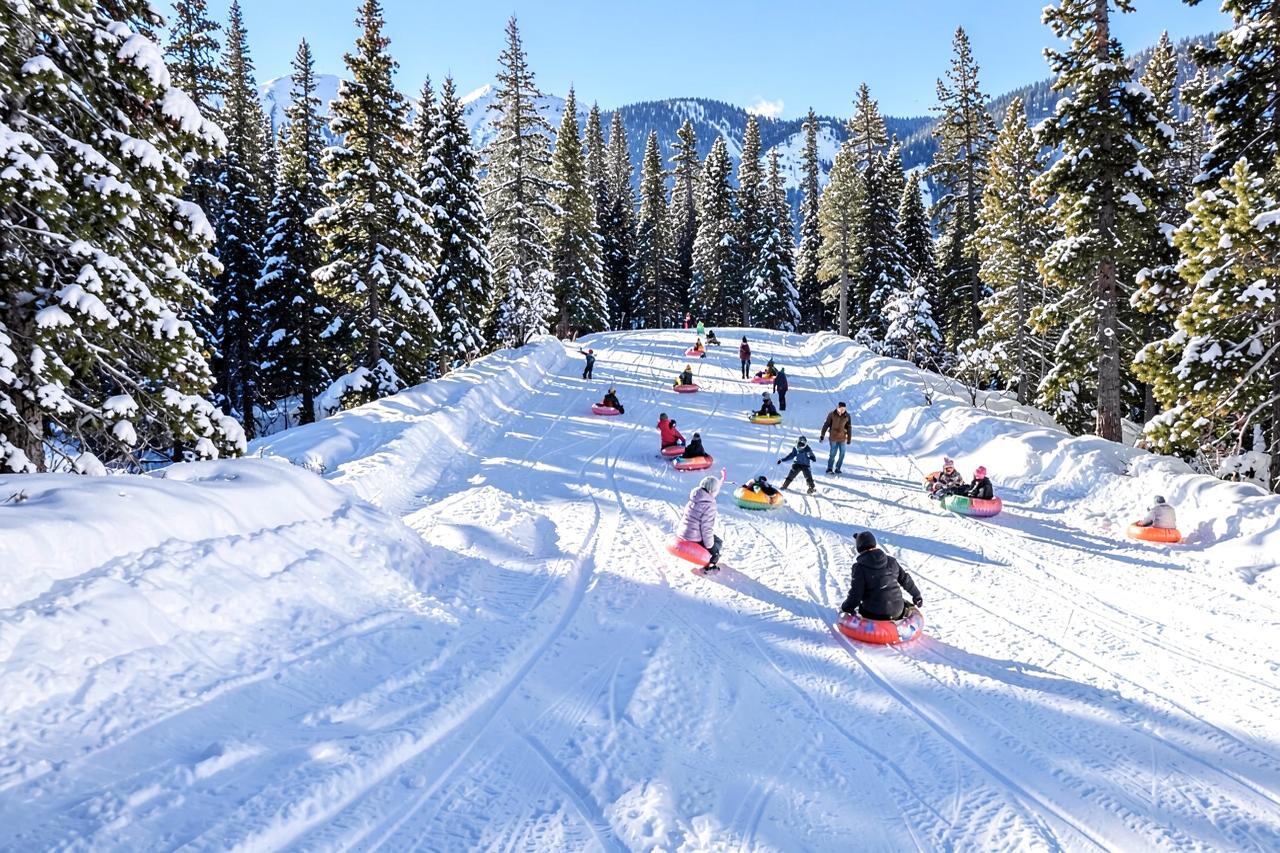
Most families who come up in winter never buy a lift pass. The band between 5,000 and 7,000 feet is where sledging, tubing and snowshoeing work from about mid-December to late March, and the two obvious places on these corridors are Leland High Sierra Snowplay above Arnold on Highway 4 and the sno-parks along Highway 108 above Pinecrest.
A California Sno-Park permit is required at the state sno-park sites and is worth having; commercial snow-play areas charge their own admission and supply the tubes. Either way, the driving rule is the same as everywhere else on this page: check chain control before you leave, and be back below 6,000 feet before dark.
Mid-December to late March, between 5,000 and 7,000 feet, no lift ticket needed.
Where: Leland, Highway 4 · Season: mid-December to late March · Cost: commercial admission or a Sno-Park permit

Cite this page
Free to quote, chart or screenshot — a credit and a link is all we ask
This page is kept up to date on purpose so it can be cited. Copy the line below, or link to the stable URL.
Arnold Haven, "When It Snows in the Sierra, by Elevation", updated 13 September 2026. https://arnoldhaven.com/guides/sierra-snow-season
- Stable URL
- https://arnoldhaven.com/guides/sierra-snow-season
- Last updated
- 13 September 2026
- Publisher
- Arnold Haven, Arnold, California
Good to know
Frequently asked questions
When does it snow in California?+
Almost all of it falls in the Sierra Nevada between November and April, and the elevation decides everything. Above 6,000 feet, expect continuous cover from December to April. At 4,000 feet, snow arrives in mid-November and melts by early April. Below 2,500 feet it snows perhaps once every few years.
When is snow most reliable for a ski trip?+
The second week of January to the first week of March. Bear Valley usually opens in mid-December and closes in early to mid-April; Dodge Ridge opens a little later and closes a little earlier because its base is 500 feet lower.
How much snow does the central Sierra get?+
Around 350 inches a season at Bear Valley (7,100 ft), 250 at the Dodge Ridge base (6,600 ft), 150 at Pinecrest (5,600 ft) and about 90 at Arnold (4,000 ft). Individual seasons vary by a factor of three in either direction.
Do I need chains?+
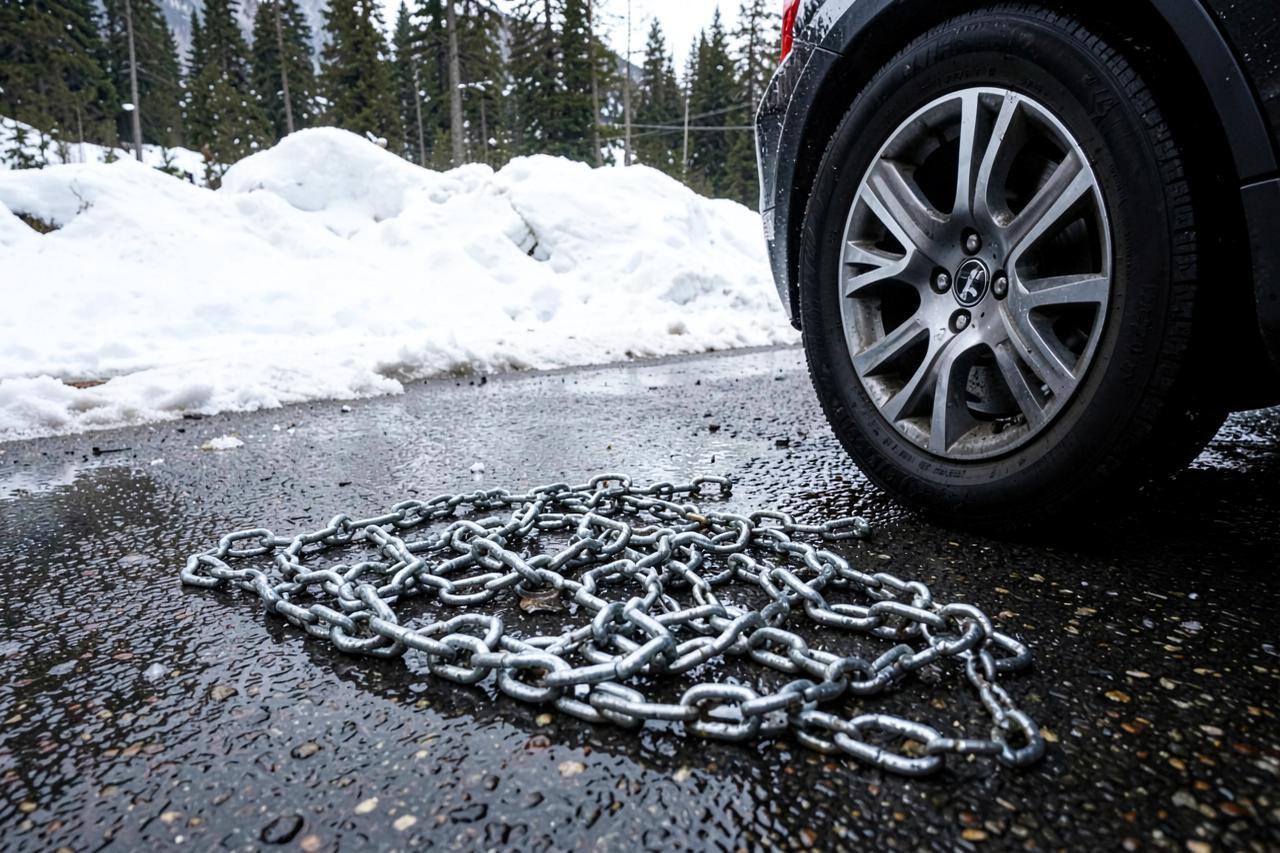
Carry them all winter above 4,000 feet. Chain controls are enforced at checkpoints above about 6,000 feet during and after storms, and R2 means chains on everything except four-wheel drive with snow tyres on all four wheels.
When does the snow melt in the Sierra high country?+
Below 5,000 feet, by early April. At 7,000 feet, early June. Above 9,000 feet, July, and in a big year some north-facing slopes hold snow all summer. The seasonal passes reopening in late May is the usual sign that the high country is becoming walkable.