
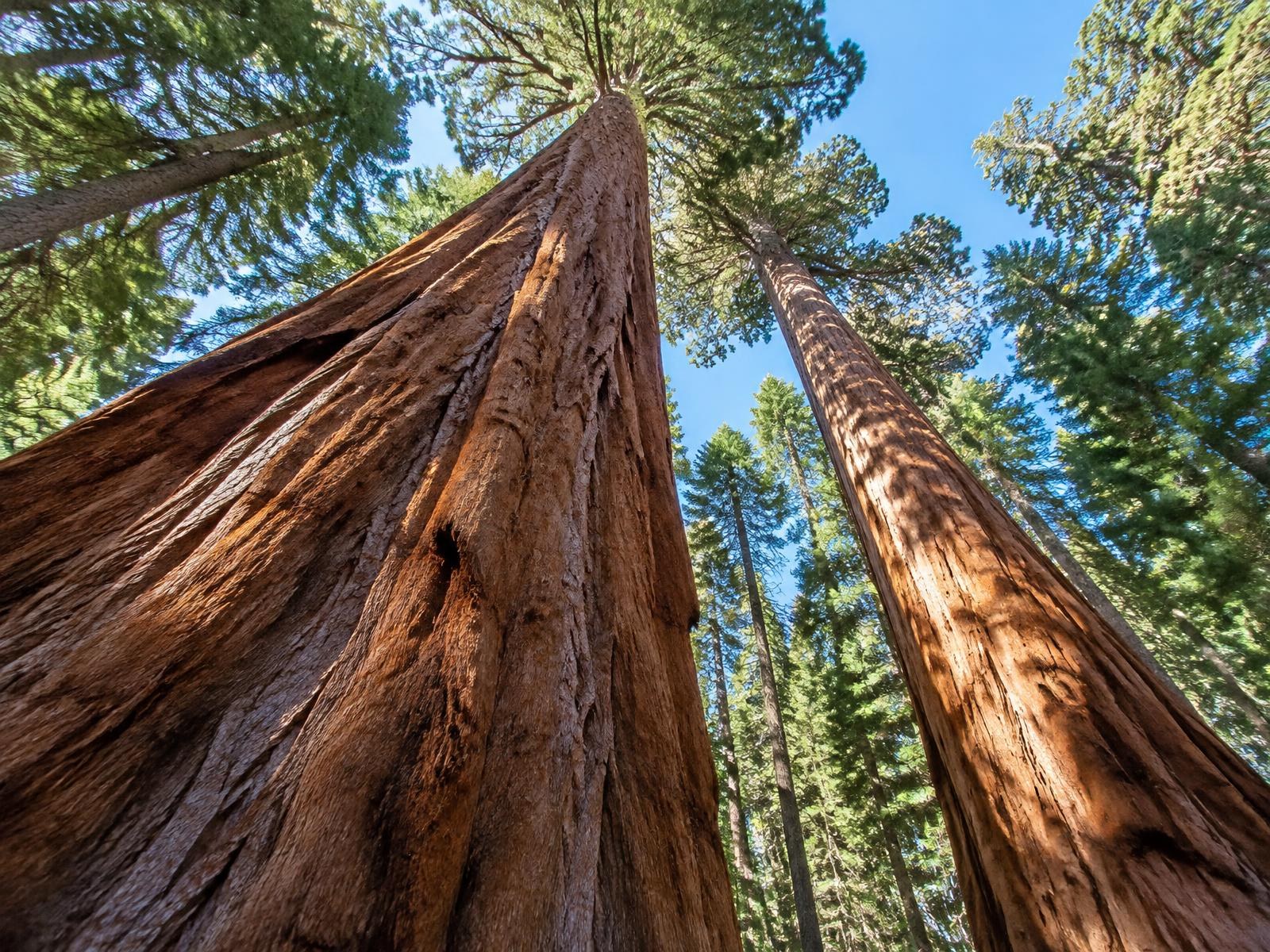
Sequoias
Every Giant Sequoia Grove in California, Compared
Giant sequoias grow naturally in 65 groves, all of them on one 260-mile strip of the western Sierra Nevada and nowhere else on earth. This is every grove worth driving to, in one sortable table: how many mature trees it holds, what it costs to get in, how far it is from San Francisco, Sacramento and Los Angeles, and how busy it gets. We live twenty minutes from the northernmost big one, so the drive times are the ones we actually use.
Sequoias
First things first: 65 groves, one mountain range, nowhere else
September 13, 2026
Giant sequoias are not spread across California. They grow naturally in 65 groves on the moist, unglaciated western slope of the Sierra Nevada, between roughly 4,500 and 7,900 feet, and in no other wild place on earth. The northernmost is a six-tree stand in Placer County. The southernmost is on the Tule River drainage, 260 miles away. Everything in the table above sits on that strip.
That matters for planning, because the two halves of the range are entirely different trips. North of the Kings River the groves are small, quiet, cheap or free, and reachable from the Bay Area in about three hours. South of it are the giants — Giant Forest alone holds something like eight thousand mature sequoias — and you are looking at four and a half hours from San Francisco and a national park entrance fee.
We are biased about the northern end, because we let cabins twenty minutes from Calaveras Big Trees. But the honest version is the useful one: if you want the single largest tree on the planet, drive south. If you want a giant sequoia grove to yourself on a Tuesday in October, drive to the northern half.

The data
The giant sequoia groves, compared
Sort by drive time, tree count or cost. Every grove below is open to the public and reachable by paved road at least part of the year.
| Placer County Big Trees | Tahoe National Forest | 6 | 5,400 | Free | 3 h 15 m | 1 h 45 m | 7 h 45 m | Almost none | Short dirt walk |
| North Grove, Calaveras | Calaveras Big Trees State Park | 150 | 4,700 | $10 per vehicle | 3 h 00 m | 2 h 00 m | 6 h 15 m | Moderate | Paved and level loop |
| South Grove, Calaveras | Calaveras Big Trees State Park | 1,000 | 4,900 | $10 per vehicle | 3 h 10 m | 2 h 10 m | 6 h 25 m | Low | 5-mile dirt trail |
| Tuolumne Grove | Yosemite National Park | 25 | 5,800 | $35 per vehicle | 3 h 45 m | 3 h 15 m | 5 h 45 m | Moderate | Steep 2.5-mile round trip |
| Merced Grove | Yosemite National Park | 20 | 5,400 | $35 per vehicle | 3 h 40 m | 3 h 20 m | 5 h 40 m | Low | Steep 3-mile round trip |
| Mariposa Grove | Yosemite National Park | 500 | 6,000 | $35 per vehicle | 4 h 15 m | 3 h 30 m | 5 h 15 m | Very high | Shuttle plus paved boardwalk |
| Nelder Grove | Sierra National Forest | 100 | 5,000 | Free | 4 h 15 m | 3 h 45 m | 5 h 00 m | Very low | Dirt road, rough in places |
| Giant Forest | Sequoia National Park | 8,000 | 6,400 | $35 per vehicle | 4 h 45 m | 4 h 30 m | 3 h 45 m | Very high | Paved trails and shuttle |
| Grant Grove | Kings Canyon National Park | 400 | 6,600 | $35 per vehicle | 4 h 30 m | 4 h 15 m | 4 h 15 m | High | Paved half-mile loop |
| Converse Basin | Giant Sequoia National Monument | 100 | 6,200 | Free | 4 h 45 m | 4 h 30 m | 4 h 30 m | Very low | Dirt road plus 2.5-mile trail |
| Mountain Home | Mountain Home Demonstration State Forest | 5,000 | 6,200 | Free | 5 h 00 m | 4 h 45 m | 3 h 45 m | Low | Narrow paved road, many short trails |
| Balch Park | Tulare County park, inside Mountain Home | 300 | 6,400 | Free day use | 5 h 00 m | 4 h 45 m | 3 h 45 m | Low | Level paths and picnic areas |
| Long Meadow (Trail of 100 Giants) | Giant Sequoia National Monument | 125 | 6,200 | Free | 5 h 30 m | 5 h 15 m | 3 h 15 m | Moderate | Fully paved, wheelchair accessible |
| Freeman Creek | Sequoia National Forest | 800 | 6,500 | Free | 5 h 45 m | 5 h 30 m | 3 h 45 m | Very low | 2-mile trail from Lloyd Meadow Road |
Click any column heading to sort. Free to reuse with attribution.
The five biggest trees on earth, by volume
Trunk volume in cubic feet, which is the measure that decides the title. All five are giant sequoias.
-
General Sherman — Giant Forest52,508 cu ft
275 ft tall, 36.5 ft across at the base
-
General Grant — Grant Grove46,608 cu ft
The nation's Christmas tree since 1926
-
President — Giant Forest45,148 cu ft
Roughly 3,200 years old
-
Lincoln — Giant Forest44,471 cu ft
-
Stagg — Alder Creek, private land until 202042,557 cu ft
Sources
- Grove count and boundaries: Dwight Willard, “The Natural Giant Sequoia Groves of the Sierra Nevada, California — An Updated Annotated List”, USDA Forest Service PSW-GTR-151.
- Tree counts and elevations: National Park Service grove pages, USDA Forest Service grove descriptions and Cal Fire's Mountain Home Demonstration State Forest management plan.
- Entry fees: California State Parks and National Park Service published day-use rates, checked September 2026.
- Drive times: measured door to door in normal daytime traffic, rounded to five minutes. Winter closures apply to Mariposa, Converse Basin, Freeman Creek and the Highway 4 groves.
The largest tree in the world is General Sherman, and the number that decides it is volume
General Sherman, in the Giant Forest of Sequoia National Park, is the largest living tree on earth: roughly 52,500 cubic feet of trunk, 275 feet tall, and about 36 feet across at the base. It is not the tallest tree, and it is not the oldest. It is the biggest, and "biggest" here means trunk volume — the amount of wood standing in one stem.
That definition is why the top five is an all-sequoia list. Coast redwoods grow taller and bristlecone pines live longer, but a giant sequoia holds its width as it climbs, so it accumulates more wood than anything else alive. The chart above is the whole argument in one picture.
If a page tells you the largest tree in the world is a redwood, it has confused two species that are 200 miles apart.
Where: Giant Forest, Sequoia National Park · Drive: 3 h 45 m from Los Angeles, 4 h 45 m from San Francisco · Fee: $35 per vehicle for seven days
Sequoia vs redwood: the difference in one paragraph
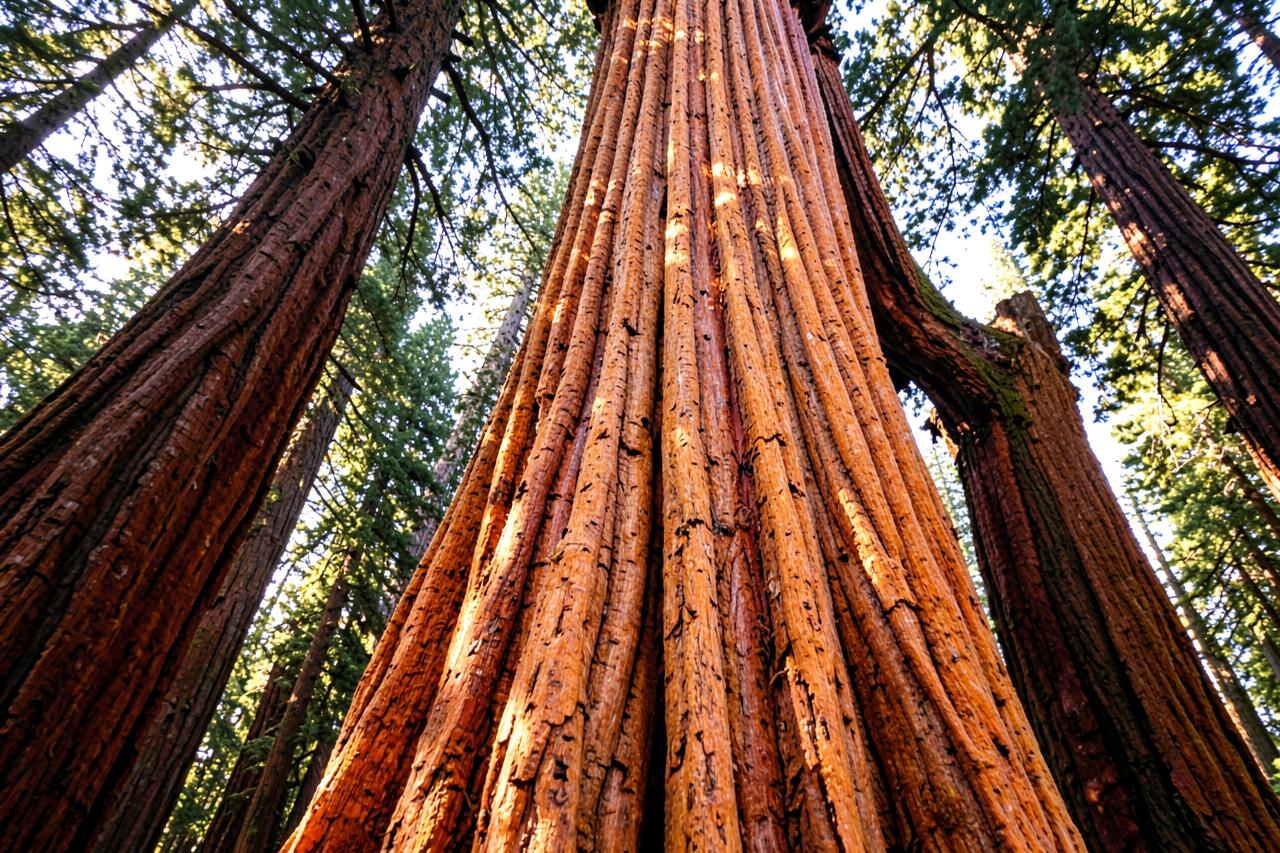
Giant sequoia (*Sequoiadendron giganteum*) grows inland, on the western slope of the Sierra Nevada, at 4,500 to 7,900 feet, in 65 groves. Coast redwood (*Sequoia sempervirens*) grows in the fog belt within about fifty miles of the Pacific, from Big Sur to southern Oregon. They are different species in the same family, and they never meet in the wild.
The physical tell is the shape. A sequoia is a fat cinnamon-coloured column with thick, spongy, deeply fluted bark and a rounded crown; a redwood is a slender spire with straighter, stringier bark. Sequoias are wider and heavier. Redwoods are taller. Sequoias live longer — the oldest reliably dated one is around 3,200 to 3,500 years, against roughly 2,200 for a redwood.
The one-line version: sequoias are the biggest, redwoods are the tallest, and they grow on opposite sides of the Central Valley.
Sequoia: Sierra Nevada, 4,500–7,900 ft, 65 groves, up to ~52,500 cu ft · Redwood: coastal fog belt, sea level to 2,500 ft, up to 380 ft tall
The tallest tree in the world is a coast redwood, not a sequoia
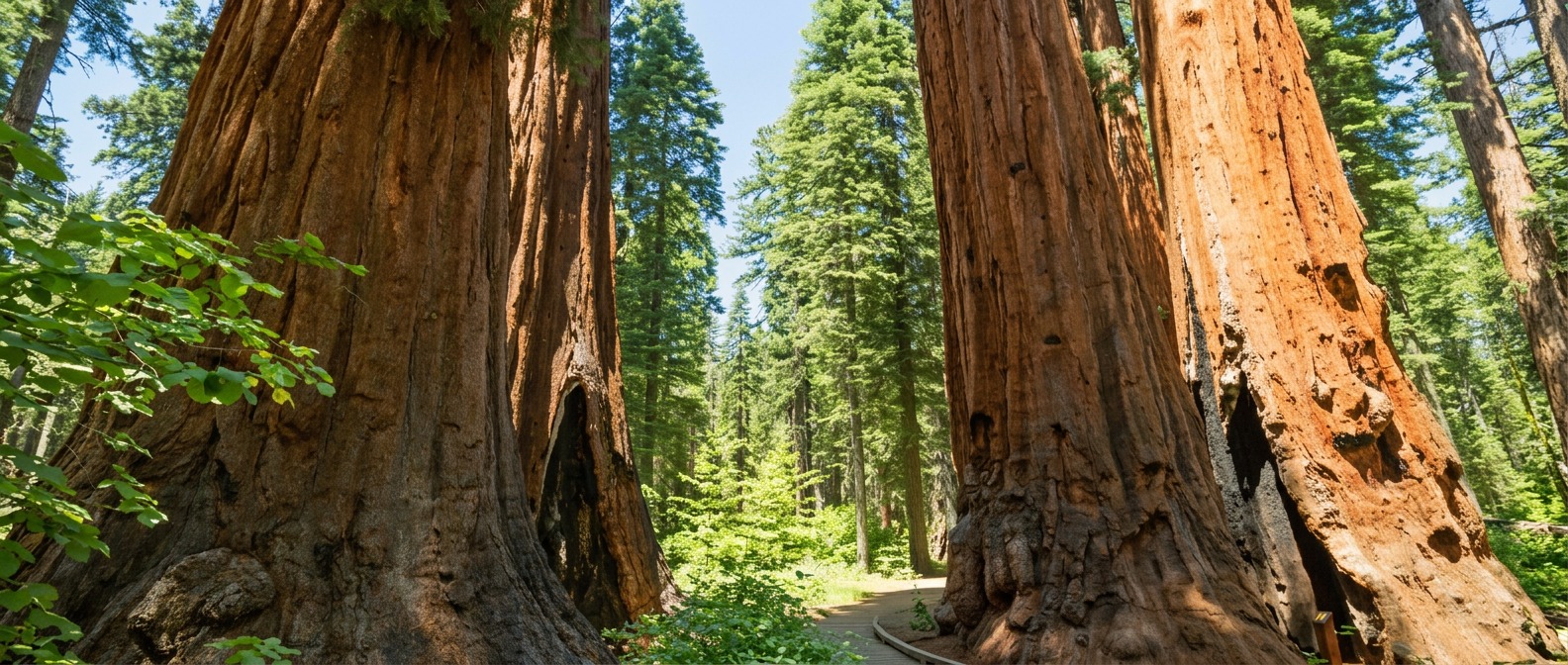
Hyperion, in Redwood National Park, stands about 380 feet — the tallest known tree on earth. It is a coast redwood, roughly 300 miles from the nearest giant sequoia, and since 2022 the National Park Service has closed public access to it because the unofficial trail people were beating through the surrounding grove was killing the understorey. There is nothing to see there and a fine if you try.
The tallest giant sequoia measured is a shade over 310 feet. Every mature sequoia grove has trees between 250 and 300 feet, which in practice is indistinguishable from the record while you are standing under it.
If you came for height, go to the coast. If you came for mass, come to the Sierra.
The oldest tree in California is a bristlecone pine
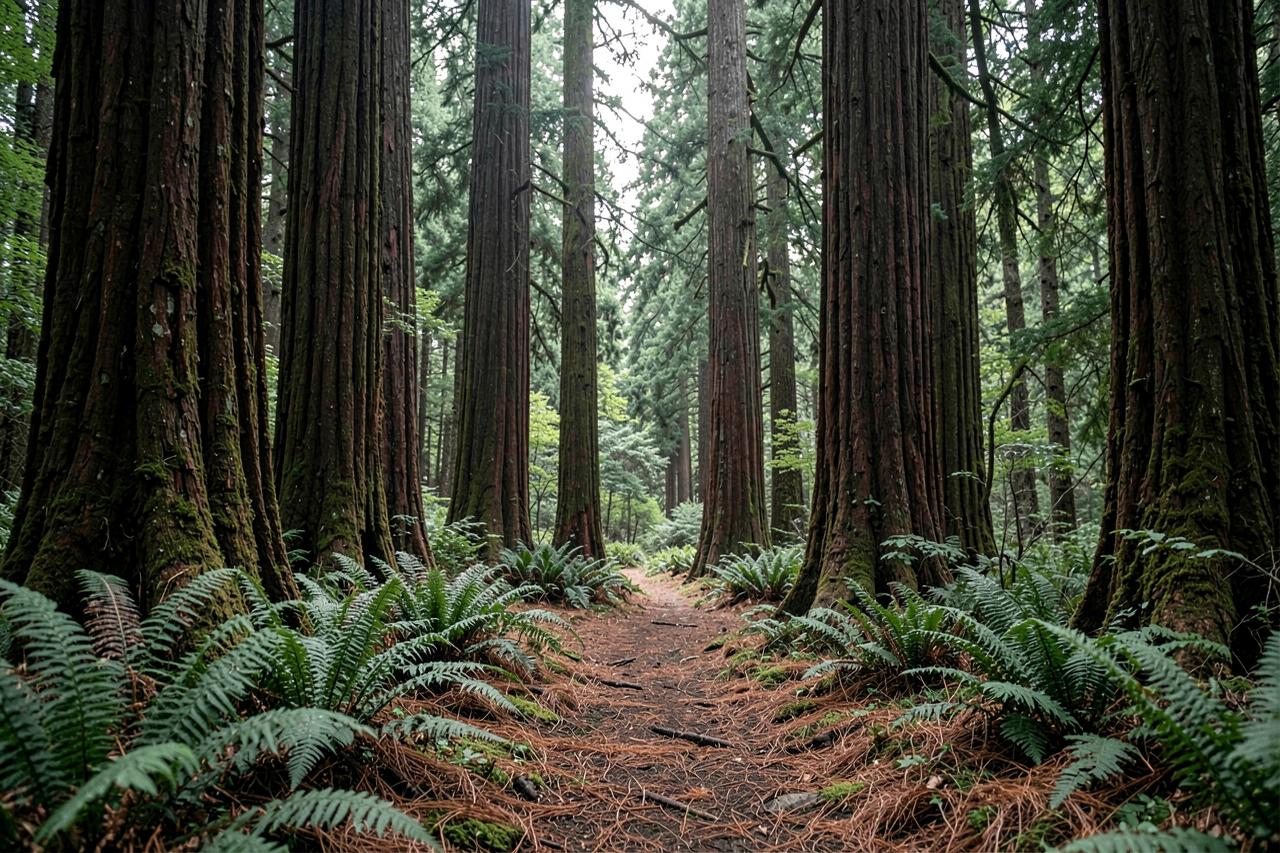
The oldest known tree in California — and one of the oldest non-clonal organisms on earth — is Methuselah, a Great Basin bristlecone pine in the White Mountains east of Bishop, at roughly 4,850 years. Its exact location is deliberately unpublished. It is not a sequoia, and any page that tells you otherwise is guessing.
The oldest giant sequoias run to about 3,200 to 3,500 years. That is still old enough that the trees in the Calaveras North Grove were mature when the Roman Republic ended, which is the fact we find actually lands with children standing in front of one.
Calaveras Big Trees: the grove that introduced the species to the world
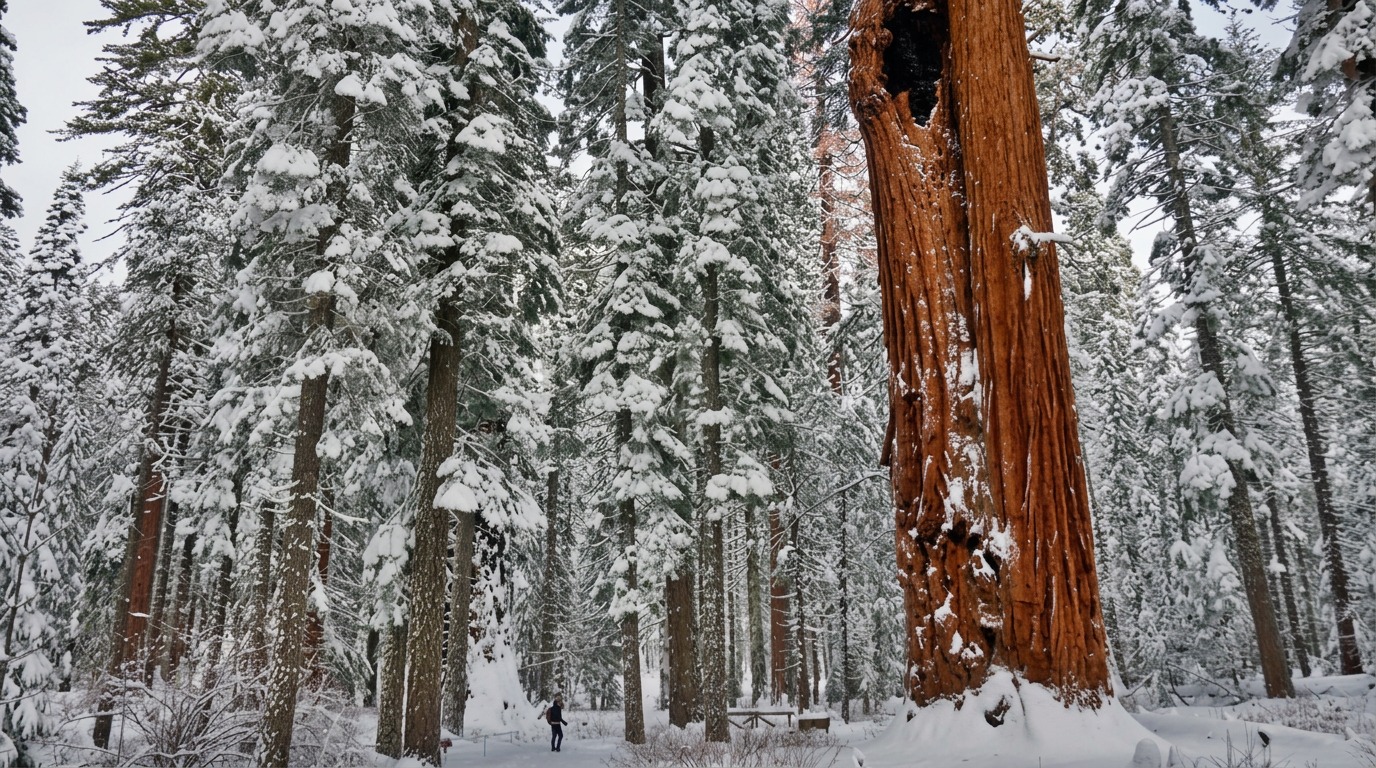
In the spring of 1852 a hunter named Augustus T. Dowd, working for a water company on the Stanislaus, chased a wounded bear into what is now the North Grove and came out with a story nobody believed. Within two years the tree he had found was felled, a section of its bark was on tour in New York, and the giant sequoia had become an international spectacle. Calaveras is where that started — the species was known to the Miwok long before, but this is the grove that made the world look.
What survives is unusually easy to visit. The North Grove loop is a flat mile through about 150 mature trees, five minutes from the park entrance and paved most of the way. The South Grove, five miles further in, holds something closer to a thousand and receives a small fraction of the visitors; the Agassiz Tree in there is the largest in the park. It is the northernmost substantial grove in the world, it costs ten dollars a car, and on a weekday outside July you will share it with almost no one.
The cheapest, quietest and most historically significant sequoia grove in California, and the only one within three hours of San Francisco.
Where: Highway 4, Arnold, Calaveras County · Drive: 3 h from San Francisco, 2 h from Sacramento, 20 minutes from our cabins · Fee: $10 per vehicle · Open: year round, with winter snow on the South Grove road
Mariposa Grove, Yosemite: the famous one, and the busiest
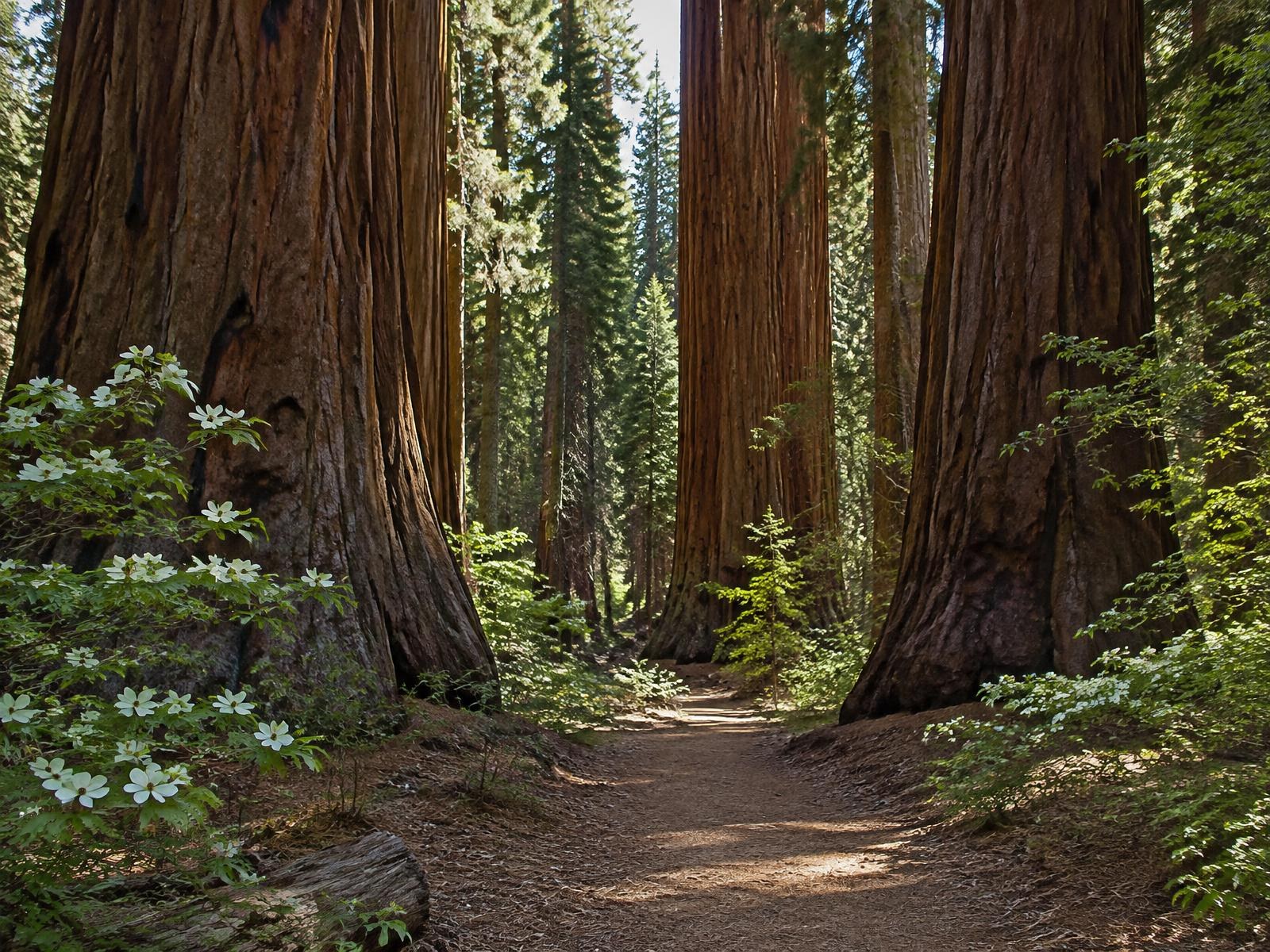
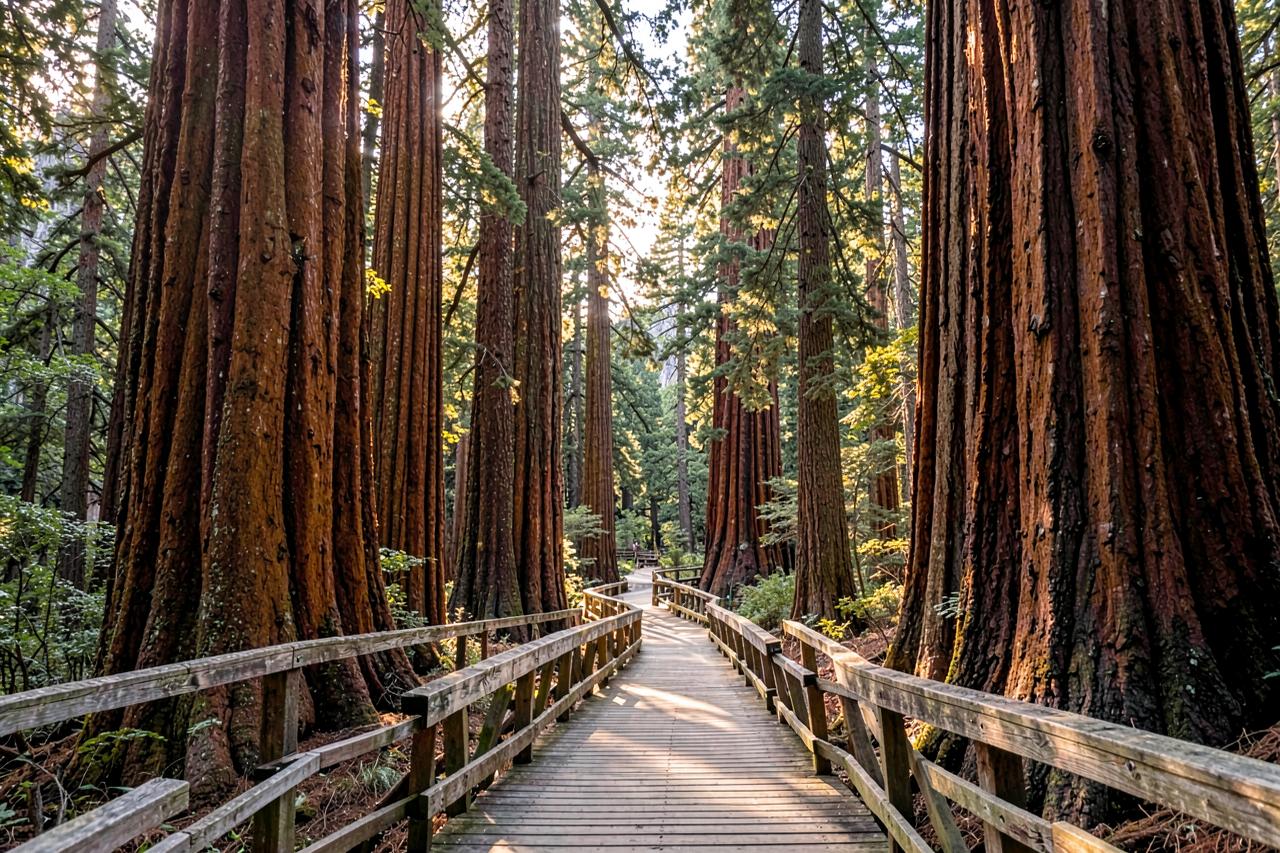
About 500 mature sequoias, including the Grizzly Giant and the walk-through California Tunnel Tree, on a rebuilt boardwalk-and-trail system that replaced the old parking lot and tram in 2018. It is the best-presented grove in the state and the one most people mean when they say they have seen sequoias.
The cost is the crowd. From spring to autumn you park at the South Entrance and take a shuttle, the lower loop is genuinely busy by ten in the morning, and the road closes entirely in winter. Go in the first hour of daylight or accept it as a shared experience.
Unmatched trees, unmatched queues. Arrive before 9am or after 4pm.
Where: Yosemite South Entrance, Highway 41 · Drive: 4 h 15 m from San Francisco, 3 h 30 m from Sacramento · Fee: $35 per vehicle for seven days · Closed: the access road shuts for winter, typically December to March
Tuolumne and Merced Groves: Yosemite without the shuttle
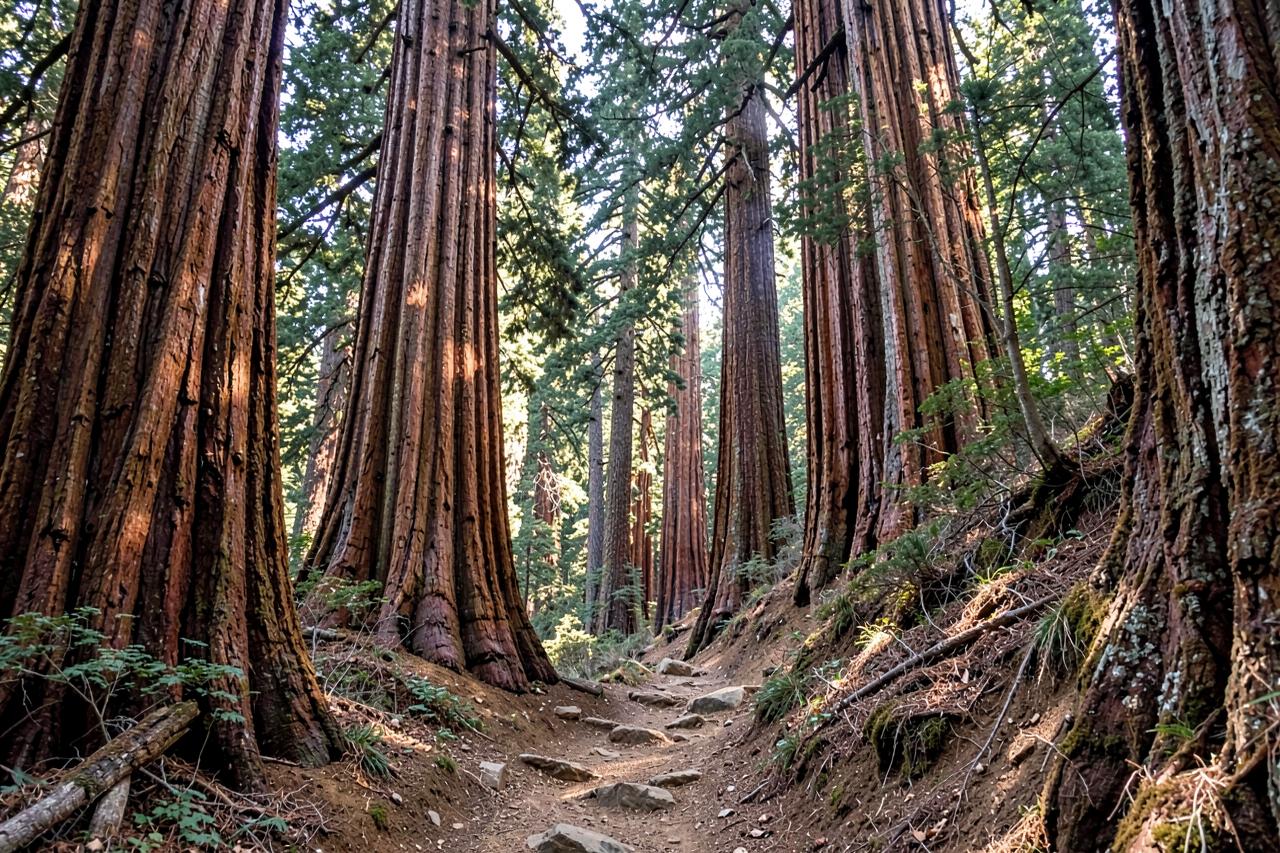
Two small groves on the Big Oak Flat side of Yosemite, both about 20 to 25 mature trees, both reached by walking down an old road and climbing back up. Tuolumne is 2.5 miles round trip with a tunnel tree at the bottom; Merced is 3 miles and quieter still. Neither has a shuttle, a boardwalk or a queue.
The catch is honest: you are paying a $35 park fee for a handful of trees and a 500-foot climb out. They are the right choice if you are already driving Highway 120, and the wrong choice as a destination in themselves.
The trade is simple — fewer trees, no people, and a hill on the way back.
Where: Highway 120 inside Yosemite, near Crane Flat · Drive: 3 h 45 m from San Francisco, 2 h 15 m from our cabins · Fee: $35 per vehicle · Season: the trailheads are ploughed but the trails are icy December to March
Nelder Grove: the one for people who have done the others
About a hundred mature sequoias on Sierra National Forest land south of Yosemite, including the Bull Buck Tree, which held a serious claim to being the largest in the world until General Sherman was properly measured. It is free, it has a small campground, and the 2017 Railroad Fire ran through part of it — which makes it one of the clearest places to see how a grove actually responds to fire, with cones opening and seedlings coming up in the burned ground.
The access road is dirt and washboarded, there is no visitor centre and no phone signal. Bring a paper map and a full tank.
Free, nearly empty, and the best place in the range to understand fire in a sequoia grove.
Where: Sky Ranch Road off Highway 41, near Oakhurst · Drive: 4 h 15 m from San Francisco · Fee: free · Season: May to October; the road is not maintained in winter
Giant Forest and Grant Grove: the main event
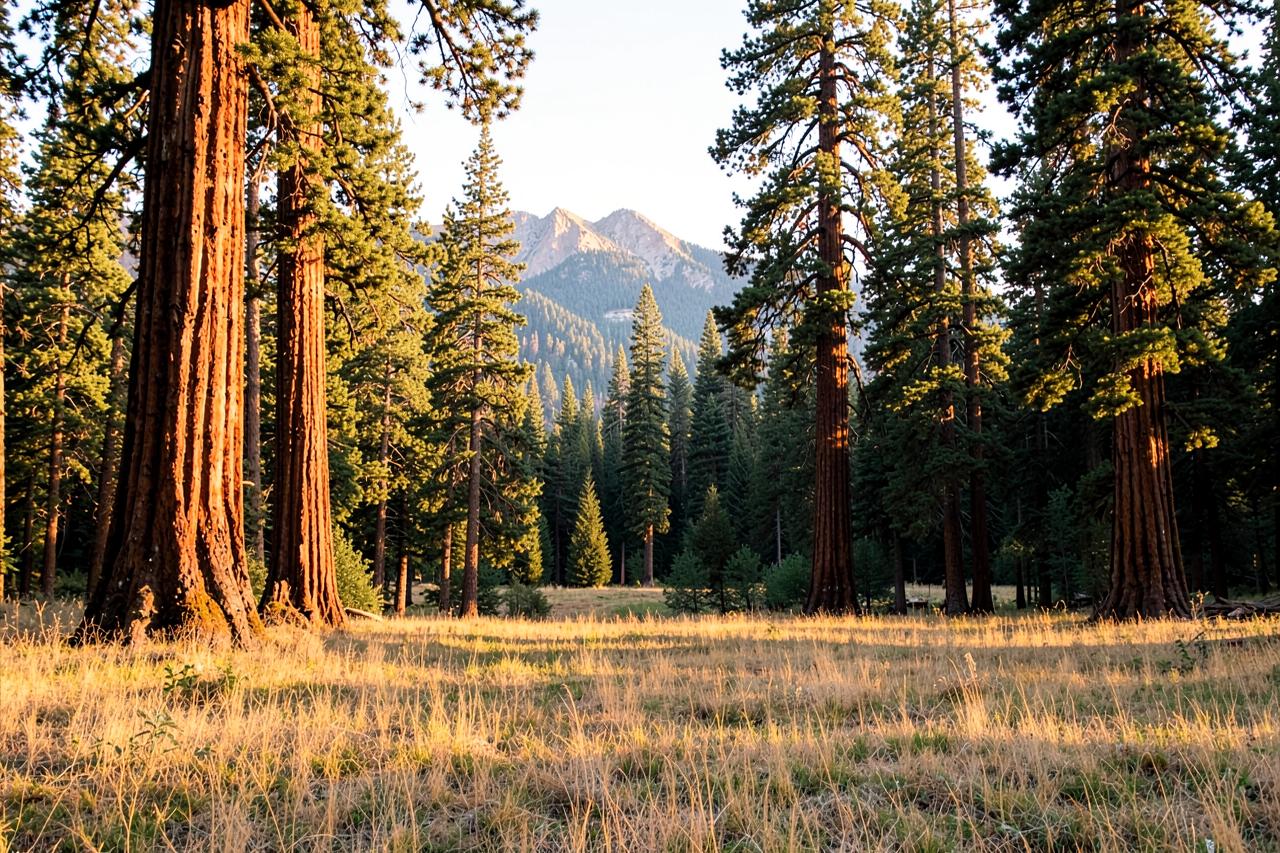
If you only ever see one grove, this is the pair to see. Giant Forest in Sequoia National Park holds roughly eight thousand mature sequoias and five of the ten largest trees on earth, with paved trails, a museum and a summer shuttle. Grant Grove, thirty minutes north in Kings Canyon, holds the General Grant Tree — third largest anywhere, and designated the nation's Christmas tree in 1926 — on a paved half-mile loop that suits wheelchairs and pushchairs.
One road serves both, and it is a serious mountain road: the Generals Highway climbs several thousand feet in tight switchbacks and is regularly chain-controlled or closed in winter. From Arnold it is a five-hour drive, so this is a separate trip rather than a day out.
The densest concentration of enormous trees on the planet, with the infrastructure to match.
Where: Generals Highway, Sequoia and Kings Canyon National Parks · Drive: 4 h 45 m from San Francisco, 3 h 45 m from Los Angeles · Fee: $35 per vehicle for seven days, covering both parks
Mountain Home, Balch Park and the Trail of 100 Giants
The southern groves are the ones almost no itinerary mentions and they are, per tree, the best value in California. Mountain Home Demonstration State Forest is managed by Cal Fire and holds something like five thousand mature sequoias, free to enter, with short trails to the Adam and Eve trees and the Methuselah stump. Balch Park sits inside it as a Tulare County day-use area with level paths and picnic tables. The Trail of 100 Giants, in the Giant Sequoia National Monument further south, is a fully paved, genuinely wheelchair-accessible loop through about 125 big trees.
All three are free, all three are quiet, and all three are on narrow mountain roads that take longer than the map suggests. If you want a grove where a wheelchair or a stroller is not a problem and there is no entrance booth, the Trail of 100 Giants is the answer to that specific question.
Free, uncrowded, and the most accessible paved grove walk in the state.
Where: Balch Park Road, Springville, and Western Divide Highway, Johnsondale · Drive: 3 h 15 m to 5 h 30 m depending on which city you start from · Fee: free · Season: roughly May to November; the Western Divide Highway closes under snow
Where to base yourself if you want a grove before breakfast
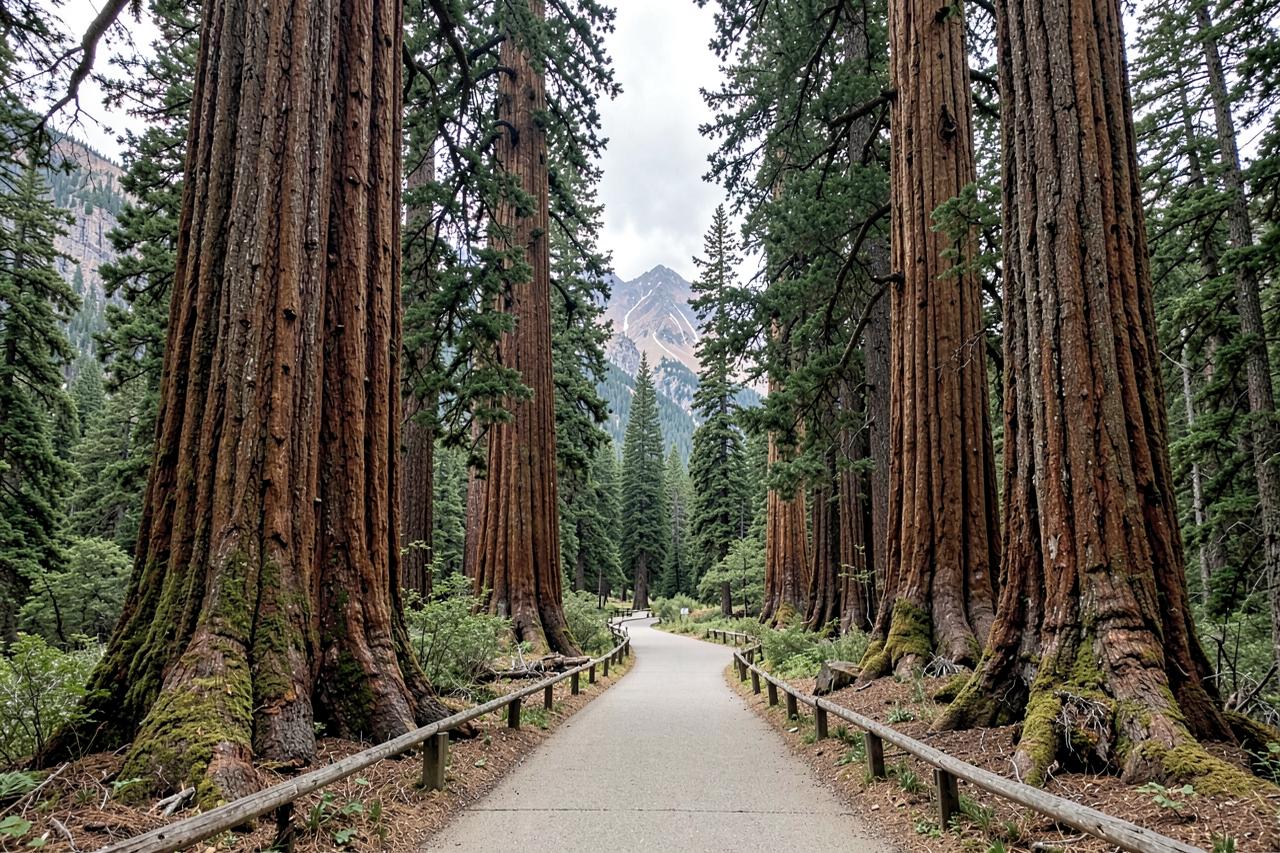
The northern groves are the only ones you can reach from the Bay Area and back in a day without the whole day being the drive, and Arnold is the town at the gate. Calaveras Big Trees is twenty minutes from both our cabins; the Tuolumne and Merced Groves are just over two hours; Mariposa is a long but genuinely doable day.
For a grove-focused trip we suggest three nights: Calaveras North and South Groves on day one, Highway 120 and the two small Yosemite groves on day two, and Mariposa on day three with a pre-dawn start. Anything further south is a separate holiday.
Cite this page
Free to quote, chart or screenshot — a credit and a link is all we ask
This page is kept up to date on purpose so it can be cited. Copy the line below, or link to the stable URL.
Arnold Haven, "Every Giant Sequoia Grove in California, Compared", updated 13 September 2026. https://arnoldhaven.com/guides/california-giant-sequoia-groves
- Stable URL
- https://arnoldhaven.com/guides/california-giant-sequoia-groves
- Last updated
- 13 September 2026
- Publisher
- Arnold Haven, Arnold, California
Good to know
Frequently asked questions
What is the largest tree in the world?+
General Sherman, a giant sequoia in the Giant Forest of Sequoia National Park. Its trunk holds roughly 52,500 cubic feet of wood, it stands about 275 feet tall and it measures around 36 feet across at the base. Largest here means trunk volume, which is why the five biggest trees on earth are all giant sequoias.
What is the difference between a sequoia and a redwood?+
Giant sequoias grow inland on the western slope of the Sierra Nevada between about 4,500 and 7,900 feet, in 65 groves. Coast redwoods grow in the coastal fog belt from Big Sur to southern Oregon. Sequoias are wider and heavier and live longer, up to about 3,500 years; redwoods grow taller, up to 380 feet. They are separate species and never grow together in the wild.
What is the tallest tree in the world?+
Hyperion, a coast redwood in Redwood National Park, at roughly 380 feet. It is not a giant sequoia, and since 2022 the National Park Service has closed public access to it to protect the surrounding grove. The tallest measured giant sequoia is a little over 310 feet.
What is the oldest tree in California?+
Methuselah, a Great Basin bristlecone pine in the White Mountains, at around 4,850 years. Its precise location is not published. The oldest giant sequoias are roughly 3,200 to 3,500 years old.
Where can I see sequoias near San Francisco?+
Calaveras Big Trees State Park, on Highway 4 at Arnold, is the closest substantial grove — about three hours from the city, ten dollars a vehicle, open year round, with a flat paved mile through the North Grove. The Tuolumne and Merced Groves in Yosemite are about forty-five minutes further and cost $35 per vehicle.
How many giant sequoia groves are there?+
Sixty-five, using the grove definition in Dwight Willard's Forest Service inventory. All of them are on the western slope of the Sierra Nevada in California. Roughly a third are on national forest land, which is why so many are free to visit.
Which grove is best for wheelchairs or pushchairs?+
The Trail of 100 Giants in the Giant Sequoia National Monument is fully paved and designed for wheelchair access. The General Grant Tree loop in Kings Canyon and the Mariposa Grove lower boardwalk are also paved. At Calaveras the North Grove loop is mostly firm and level but not fully paved.